

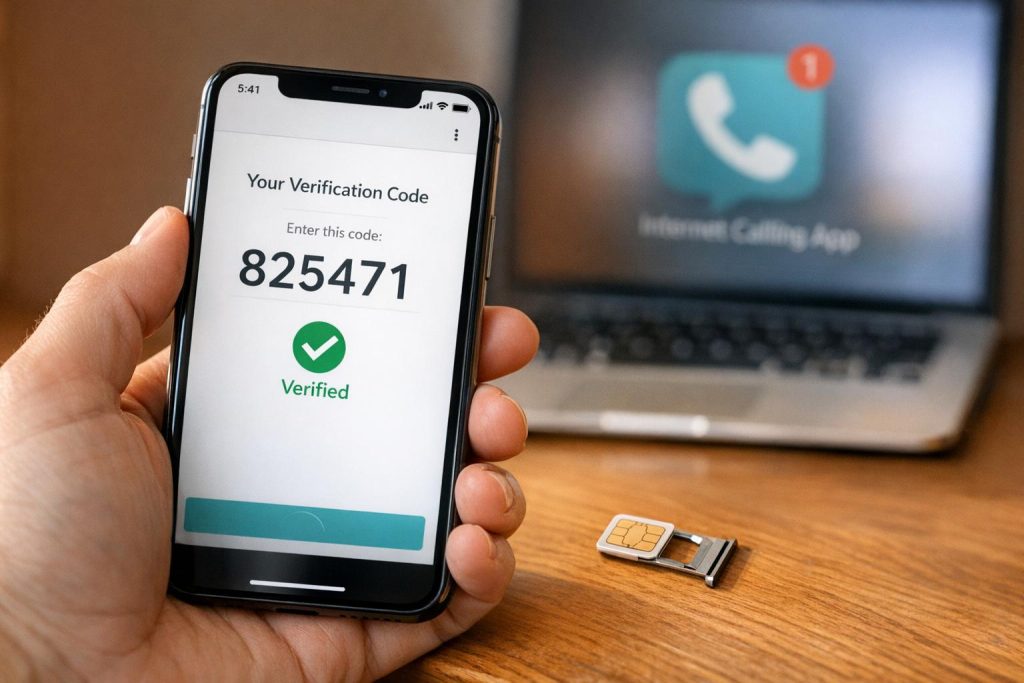
Ever tried using a free VoIP number for SMS verification and ended up frustrated? Here’s why it doesn’t work: most platforms block VoIP numbers. They rely on carrier databases to detect whether a number is internet-based (VoIP) or tied to a real SIM card (non-VoIP). VoIP numbers fail 60–80% of the time, while non-VoIP numbers succeed 95–99%. Platforms like WhatsApp, PayPal, and banking apps often reject VoIP numbers outright, leaving users stuck.
Why non-VoIP numbers work better:
- They are tied to physical SIM cards provided by carriers like AT&T or Verizon.
- Faster and more reliable SMS delivery (under 5 seconds).
- Lower failure rates and higher acceptance across platforms.
- Secure routing through cellular networks, unlike internet-based VoIP.
If you need reliable SMS verification, non-VoIP numbers are the way to go. Services like MobileSMS.io offer real SIM-based numbers for seamless registration and secure account access.
VoIP vs Non-VoIP US Phone Numbers: What’s the Difference?
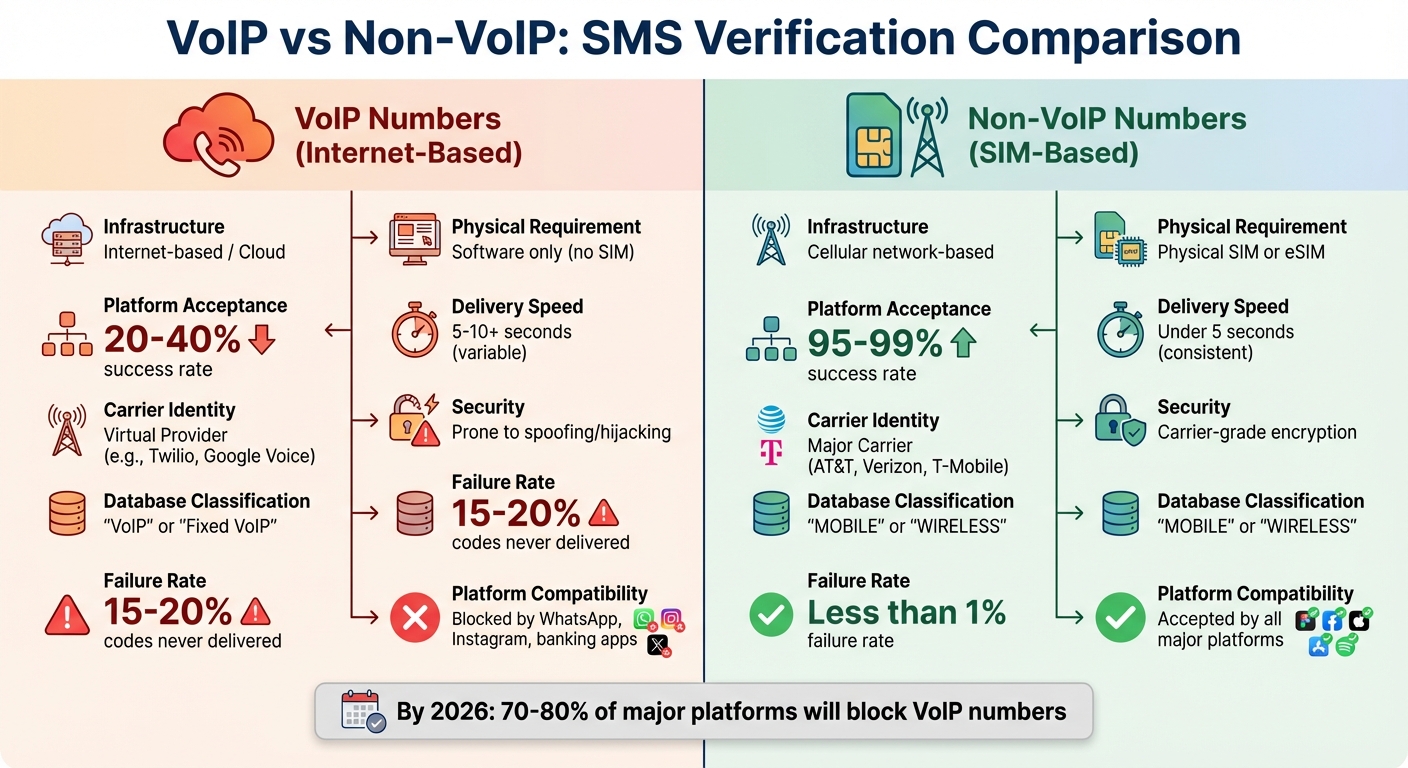
VoIP vs Non-VoIP Phone Numbers: SMS Verification Success Rates Comparison
Grasping the difference between VoIP and non-VoIP numbers is key to understanding why SMS verification can succeed or fail. Here’s a closer look at how these two types of numbers differ.
What Are VoIP Phone Numbers?
VoIP (Voice over Internet Protocol) numbers are internet-driven phone numbers that work through data connections like WiFi or mobile internet. Unlike traditional numbers, they don’t rely on physical SIM cards and operate entirely via software. These numbers are often offered through apps, either for free or at a low cost.
Instead of connecting through cellular networks, VoIP numbers use cloud-based telephony systems. When a platform sends an SMS to a VoIP number, the message travels through virtual infrastructure rather than a carrier’s Short Message Service Center (SMSC). This routing method makes it easier for platforms to identify and block these numbers.
What Are Non-VoIP US Phone Numbers?
Non-VoIP numbers are traditional phone numbers assigned by major carriers like AT&T, Verizon, or T-Mobile. These numbers are tied to physical SIM cards or eSIMs and rely on direct cellular networks. When you sign up for a phone plan from a carrier, you’re getting a non-VoIP number.
SMS messages to these numbers go through the carrier’s SMSC, which ensures high-level encryption and security. In telecom databases, non-VoIP numbers are classified as “MOBILE” or “WIRELESS.”
Technical Differences Between VoIP and Non-VoIP
The technical differences between these two types of numbers explain why SMS verification success rates vary so much. Platforms use line-type detection by querying carrier databases before sending SMS codes. If the number is flagged as "VoIP" or "Fixed VoIP", the verification request is often denied without notification.
| Feature | VoIP (Virtual/App-Based) | Non-VoIP (Real SIM/Carrier) |
|---|---|---|
| Infrastructure | Internet-based / Cloud | Cellular network-based |
| Physical Requirement | Software only | Physical SIM or eSIM |
| Platform Acceptance | 20–40% | 95–99% |
| Delivery Speed | 5–10+ seconds (Variable) | Under 5 seconds (Consistent) |
| Carrier Identity | Virtual Provider (e.g., Twilio) | Major Carrier (AT&T, Verizon) |
| Security | Prone to spoofing/hijacking | Carrier-grade encryption |
This table highlights why non-VoIP numbers are preferred for SMS verification – they offer faster delivery, better security, and higher acceptance rates.
It’s important to note that platforms don’t rely on your IP address to classify numbers. Instead, they check the carrier’s database in real time. A Google Voice number, whether it’s brand new or several years old, will still be flagged as VoIP.
These differences directly shape the reliability of SMS verification processes.
Why Free VoIP Numbers Fail SMS Verification
Platforms rely on carrier lookup databases to identify and block VoIP numbers. If a number is flagged as "VoIP" or "Fixed VoIP" instead of "Mobile" or "Wireless", it’s typically rejected on the spot – often without any notification to the user.
How Platforms Detect and Block VoIP Numbers
To verify phone numbers, platforms perform quick queries through carrier databases. Before sending an SMS, they determine whether the number operates on a cellular network or through internet-based relays. Unlike mobile numbers, VoIP numbers don’t use native carrier SMS paths (SMSC). Instead, they rely on internet infrastructure, which makes them easily identifiable as non-standard. This difference in routing not only affects user experience but also raises security concerns, as platforms prioritize numbers with reliable, carrier-grade routing.
Big names like WhatsApp, Instagram, PayPal, Venmo, and most banking apps actively block VoIP numbers. Providers such as Twilio, Google Voice, and TextNow are often included in these blocklists. By 2026, it’s estimated that 70% to 80% of major platforms will use carrier lookup systems to block VoIP numbers. Even if a VoIP number initially works, fraud detection systems may flag it later, leading to account bans months down the line.
Examples of VoIP Number Failures
VoIP numbers have a success rate of only 20–40% for SMS verification, compared to nearly 100% for SIM-based numbers. They also experience slower message delivery and up to a 20% failure rate for one-time passwords (OTPs) during high traffic.
Platforms like WhatsApp, Twitter/X, Tinder, Hinge, Bumble, Google, Telegram, Binance, and Coinbase are known to block VoIP numbers. Many users waste 60 to 90 minutes cycling through free VoIP numbers, only to face account suspensions or permanent bans. These challenges highlight why non-VoIP numbers are far more reliable for bypassing verification blocks.
Security Vulnerabilities of VoIP Numbers
VoIP numbers are easy to obtain in bulk without Know Your Customer (KYC) verification, which makes them a red flag for fraud detection algorithms. Their low cost – or even free availability – associates them with spam, bot accounts, and other abusive activities, causing platforms to block them automatically.
"Major platforms actively maintain blocklists of VOIP number ranges. Even if a virtual number works today, it may be flagged tomorrow – leaving you locked out of critical accounts."
- VoidMob
Additionally, VoIP messages are more susceptible to interception and spoofing compared to carrier-grade SMS. These weaknesses underscore the importance of using non-VoIP numbers. SIM-based solutions offer the trust and reliability that platforms require for secure identity verification.
How Non-VoIP US Phone Numbers Work Better
Non-VoIP numbers are recognized by platforms as legitimate mobile devices, ensuring you can bypass SMS verification successfully. When a service checks carrier databases, these numbers are classified as "MOBILE" or "WIRELESS", which guarantees smoother delivery and higher acceptance rates.
Platform Acceptance Rates for Non-VoIP Numbers
SIM-based numbers have an impressive success rate of 95-99% on even the most secure platforms. By 2026, around 70-80% of major platforms are expected to use carrier lookup databases to filter out virtual numbers before delivery attempts.
The difference is stark. While VoIP numbers only manage a 20-40% success rate, non-VoIP numbers from carriers like AT&T, T-Mobile, and Verizon are listed in telecom databases as genuine user lines. High-security platforms – such as banking apps and crypto exchanges – often reject VoIP numbers entirely, but treat non-VoIP numbers as reliable, just like any other mobile device.
Faster SMS Delivery with Non-VoIP
Non-VoIP numbers consistently receive SMS codes in under 5 seconds. This is because they utilize standard cellular routing, bypassing the delays and complications associated with internet-based relays.
On the other hand, VoIP numbers are prone to delays. SMS delivery can take 5-10 seconds or longer, and 15-20% of codes may never arrive. Internet-based routing often triggers security filters, leading to blocked or delayed messages.
Side-by-Side Comparison: VoIP vs Non-VoIP Results
| Factor | VoIP Numbers | Non-VoIP Numbers |
|---|---|---|
| Success Rate | 20-40% on major platforms | 95-99% across all platforms |
| Delivery Speed | 5-10+ seconds (often fails) | Under 5 seconds |
| Database Classification | "VoIP" or "Fixed VoIP" | "MOBILE" or "WIRELESS" |
| Platform Compatibility | Blocked by WhatsApp, Instagram, banking apps | Accepted by major platforms |
| Failure Rate | 15-20% codes never delivered | Less than 1% failure rate |
These differences highlight why non-VoIP numbers excel. They connect directly to cellular towers through physical or digital SIM cards, meeting the authentication standards required by high-security platforms. In contrast, VoIP numbers depend on internet connections, which are often flagged as unreliable and actively blocked by platforms. Up next, we’ll examine how these advantages play out in real-world scenarios with MobileSMS.io.
sbb-itb-5a89343
MobileSMS.io: Non-VoIP US Phone Numbers That Work
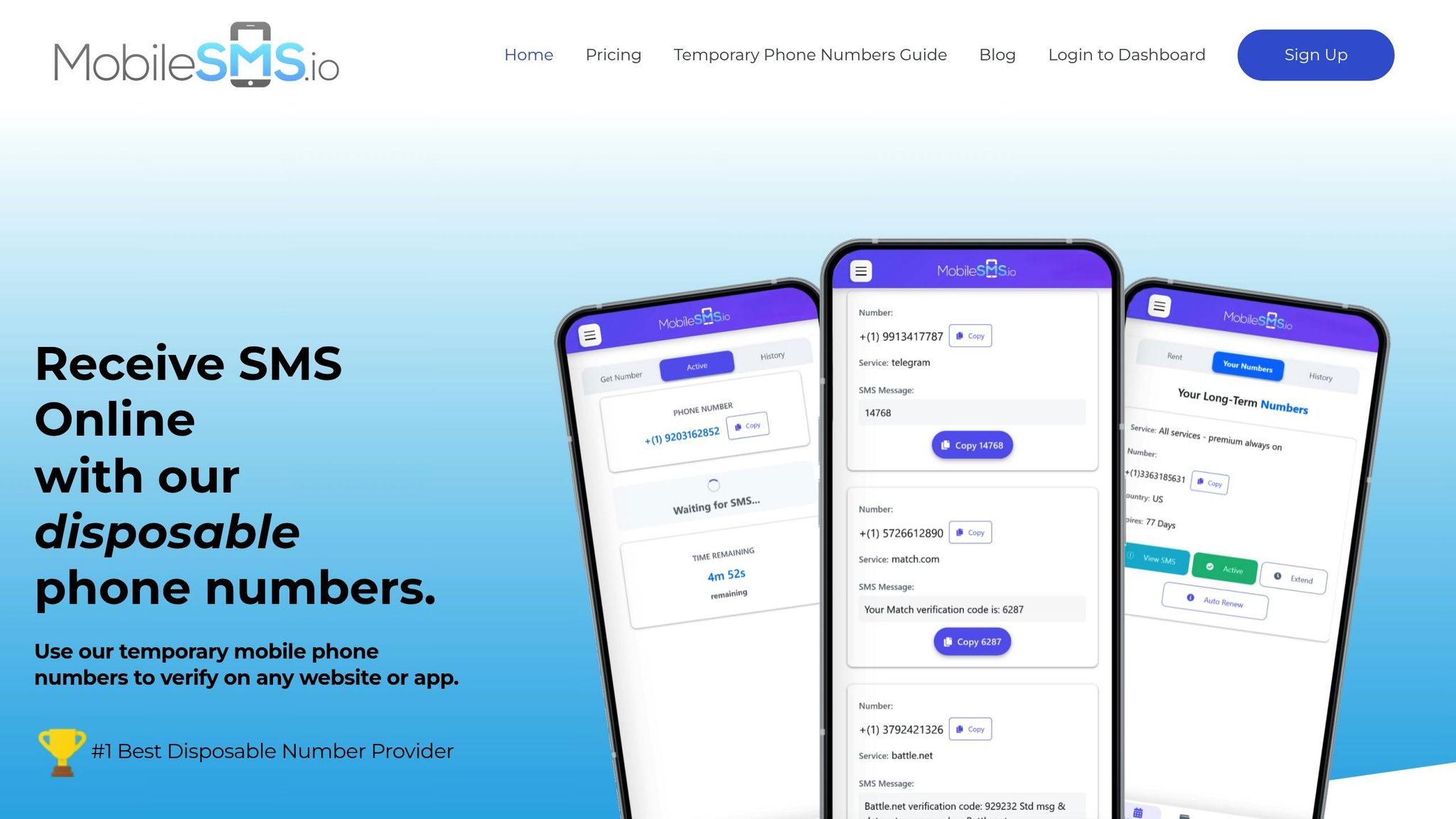
Real SIM-Based Numbers from MobileSMS.io
MobileSMS.io offers SIM-based phone numbers sourced directly from top carriers like AT&T, T-Mobile, and Verizon. These numbers appear in carrier databases as "MOBILE" or "WIRELESS", which is exactly what verification systems look for when sending codes.
With availability in over 100 countries, these numbers are compatible with 1,200+ platforms, including giants like Google, WhatsApp, Facebook, Instagram, Amazon, and major banking apps. A real-time dashboard ensures SMS codes are delivered in seconds. For premium users, codes can even be forwarded directly to Slack or Discord using shared 2FA integrations, making it easy for teams to collaborate without sharing sensitive login details.
These features, backed by reliable performance, are coupled with competitive pricing options outlined below.
Pricing: One-Time and Long-Term Options
MobileSMS.io operates on a pay-per-success model, meaning you only pay when an SMS code is successfully delivered. One-time numbers start at $3.50 per verification. For US-specific services, the rates are $4.25 for Google, $4.50 for Facebook, and $5.50 for WhatsApp or Tinder.
For ongoing needs, 7-day rentals begin at $15, while 30-day rentals are $30, with the option to renew monthly. Need a single number for multiple platforms? The All Services Premium plan is available at $45 per month for US numbers, with prices reaching up to $100 depending on the country and features. Annual plans range between $250 and $450 for those requiring consistent, long-term access.
This flexible pricing structure pairs perfectly with the high-performance verification services MobileSMS.io delivers.
When to Use MobileSMS.io
MobileSMS.io’s SIM-based numbers are ideal for a variety of situations, offering tailored solutions for different needs.
- Use one-time numbers for tasks like registering on a new platform or creating temporary accounts where future access isn’t required.
- Opt for long-term rentals when you need frequent re-verification, such as for WhatsApp business accounts, banking apps with recurring security checks, or cryptocurrency exchanges with regular 2FA requirements.
- Protect your privacy by keeping your personal number off platforms that may sell your data or lead to spam.
Digital marketers and e-commerce sellers find this service especially useful for managing multiple accounts across social media or marketplaces. Additionally, for users accessing international platforms with regional restrictions, MobileSMS.io’s global reach allows you to comply with geographic requirements without physically being in that country.
Conclusion
The shortcomings of free VoIP numbers underscore the importance of reliable verification, a need that non-VoIP numbers address effectively. While free VoIP options may seem convenient, they often lead to wasted effort, failed verifications, and even account bans. By 2026, it’s estimated that 70–80% of major platforms will block VoIP numbers, leaving a success rate of only 20–40%. Even when codes are delivered, 15–20% of them may still fail, and platforms can retroactively ban accounts once their fraud detection systems catch up.
Non-VoIP numbers, on the other hand, offer a far more dependable solution with a success rate of 95–99%. These numbers are listed as "MOBILE" or "WIRELESS" in carrier databases and meet all verification standards. They rely on legitimate cellular networks like AT&T, T-Mobile, and Verizon, ensuring codes are delivered in under 5 seconds. This reliability significantly reduces the risk of detection and account bans, making them the smarter choice for secure verifications.
Whether you’re managing business accounts, handling social media, or accessing financial platforms, non-VoIP numbers simplify the process. They provide a seamless experience for one-time verifications or ongoing account access without the headaches associated with free alternatives.
If you’re looking for a dependable solution, MobileSMS.io offers real carrier-based numbers that work across over 1,200 platforms. With instant code delivery and compatibility for critical accounts like business Instagram profiles, crypto exchanges, and banking apps, it’s the go-to choice for results you can count on.
FAQs
Why are VoIP numbers often blocked for SMS verification?
Platforms block VoIP numbers for SMS verification because these numbers are more prone to fraud, spoofing, and misuse. Unlike traditional phone numbers linked to physical SIM cards, VoIP numbers operate over the internet, making them easier to create, recycle, or manipulate. Since they lack carrier verification, platforms see them as a security risk.
Many services, like social media and online banking, insist on SIM-based numbers to confirm authenticity and minimize abuse. VoIP numbers often fail verification checks because they’re flagged as temporary or unreliable in various databases. By restricting VoIP numbers, platforms aim to enhance security and safeguard users from potential fraud.
Why are non-VoIP numbers better for SMS verification?
Non-VoIP numbers are tied to physical SIM cards and traditional carrier networks, which makes them much more reliable for SMS verification. This setup ensures they’re recognized as genuine by platforms and makes them harder to spoof. On the other hand, VoIP numbers depend on internet connections, which makes them more prone to fraud and often leads to them being flagged or blocked.
Many major platforms, such as Google, WhatsApp, and financial services, actively reject VoIP numbers due to their higher risk. They prefer non-VoIP numbers because these are linked to real devices. Non-VoIP numbers also deliver verification codes faster and more consistently, making them the go-to option for secure and hassle-free SMS verification.
How does MobileSMS.io deliver reliable SMS verification with high success rates?
MobileSMS.io provides dependable SMS verification by utilizing non-VoIP, physical SIM-based phone numbers connected directly to real carrier networks. This approach makes these numbers far less likely to be flagged or blocked by platforms, ensuring that verification codes are delivered both quickly and securely.
Since these numbers are linked to physical SIM cards, they undergo carrier validation, which minimizes message filtering and delays. This means faster delivery – often in under 10 seconds – and higher acceptance rates on platforms like Google, WhatsApp, and even financial institutions that typically reject VoIP numbers. By leveraging real carrier infrastructure, MobileSMS.io ensures reliable and efficient SMS verification for its users.