

Using fake phone numbers for verification might seem like a good way to protect your privacy, but it comes with major risks:
- Low Success Rates: Platforms like Google and Meta block most fake numbers. Only 20–40% of verification attempts succeed.
- Account Bans: Even if a fake number works initially, accounts are often flagged and banned within days.
- Security Risks: Shared and recycled numbers can expose your accounts to hijacking and data leaks.
- Privacy Issues: Public and disposable numbers leave your information vulnerable to third parties.
The better option? Real SIM numbers. These are issued by mobile carriers and recognized as legitimate by platforms. They offer a 95%+ success rate for verification and avoid the risks tied to fake numbers.
If you’re serious about protecting your accounts, skip the fake numbers and use a real SIM number instead.
What Are Fake Numbers? Types and How They Work
"Fake numbers" refer to virtual phone numbers used for SMS verification that keep your actual number private. Unlike real SIM-based numbers linked to physical networks, these virtual numbers are created without a physical SIM card or carrier authentication. Because of this, platforms can often detect and block them.
There are three primary types of fake numbers commonly used for SMS verification. Each has its own features and potential risks. Let’s break them down:
Online Number Generators
Also known as Public SMS Gateways (PSGs) or disposable phone numbers (DPNs), these services provide temporary numbers for free, without requiring any sign-up. They display incoming SMS messages on public websites, meaning anyone can view the verification codes sent to these numbers.
While they offer quick and free privacy, the downside is that verification codes are exposed publicly. These numbers are active for only a short time – sometimes just minutes. A 12-month study tracked 17,141 disposable numbers and found over 70 million messages, with significant fraud linked to their use. Platforms like Google and Facebook maintain blacklists of these numbers, leading to immediate verification failures.
VoIP-Based Numbers
VoIP-based numbers are virtual numbers provided by Voice over Internet Protocol services like Google Voice or TextNow. Instead of relying on cellular networks, these numbers use the internet to send and receive calls and SMS. You can access them through apps or online accounts to receive verification codes.
However, many platforms reject VoIP numbers because fraud detection systems can identify them through specific technical markers, such as non-carrier prefixes and IP-based routing patterns. These numbers are often flagged for abuse due to high-volume usage. Organizations like the Mobile Authentication Taskforce, which includes AT&T and T-Mobile, actively work to block them. Even if a VoIP number initially works, it’s likely to be flagged and banned within 24–72 hours.
Shared Inbox Services
Shared inbox services are paid platforms that rent out access to a single phone number’s SMS inbox to multiple users. These rentals are typically short-term, lasting anywhere from 3 to 10 minutes, and often cover a variety of U.S. area codes.
The major risk here is that verification codes are visible to all users who access the same inbox. For example, if you receive a WhatsApp code and another user checks the inbox immediately after you, they could intercept the code and take over your account. This shared access model has been linked to millions of account hijackings, as documented in various fraud studies.
sbb-itb-5a89343
Security Risks of Using Fake Numbers
Using fake numbers can put your accounts and personal data at serious risk.
Account Hijacking and Data Leaks
One major risk of fake numbers is that they can leave your accounts vulnerable to unauthorized access. Shared inbox services or public number generators are especially risky since anyone with access to the same number can intercept your verification codes. This could allow them to reset your passwords, bypass two-factor authentication, and take over your accounts. The danger is immediate – someone checking the shared inbox could grab your code in seconds.
But it doesn’t stop there. Fake numbers often end up in the hands of data brokers, who link them to your personal details like your name, address, and online behavior. These details can be sold to third parties, and in the wrong hands, they might even be used for identity theft. The combination of intercepted verification codes and personal data creates a perfect storm for criminals, putting both your security and compliance with service terms at risk.
Platform Bans and Terms of Service Violations
Most major platforms explicitly ban the use of fake numbers in their terms of service. Violating these rules can lead to immediate or delayed account bans. Platforms like Google, Facebook, and Instagram, as well as banking apps, maintain extensive blacklists of VoIP and disposable numbers. If your number is flagged, you could lose access to your account, along with all associated messages, contacts, purchase histories, and linked services.
Platforms also monitor behavioral patterns. For example, if a single number is used to verify multiple accounts in a short time – say, 14 accounts in a week – it’s likely to be flagged as fraudulent. Even if you successfully verify your account initially, fake numbers are often blacklisted soon after, leaving you locked out.
Failed Verifications and Number Blacklisting
Fake numbers have a poor track record when it comes to verification. Platforms use advanced detection methods, like carrier lookups, to identify VoIP or disposable numbers. Since late 2024, platforms like Google have implemented strict blocks on known VoIP ranges, rejecting them outright during signup. Even if a fake number works temporarily, it’s likely to be blacklisted within days as fraud databases are updated.
The detection process goes beyond just the number itself. Platforms also analyze your IP address and carrier details. For example, using a T‑Mobile number while connected to a VPN or datacenter IP can trigger fraud alerts due to mismatched data. As VoidMob, an industry expert, explains:
"Platforms don’t just check what number you use – they check whether everything around that number makes sense. Carrier type, number history, IP origin, behavioral patterns. Miss one layer and the whole verification fails."
– VoidMob
This layered detection system makes fake numbers unreliable and can leave you locked out of essential services when you need them most. These risks highlight why real SIM numbers remain the safest option for secure and long-term account verification.
How Platforms Detect and Ban Fake Numbers
Platforms like Google, WhatsApp, and Facebook have stepped up their game when it comes to detecting fake numbers for Tinder and other social platforms. They use more than just basic blacklists – HLR (Home Location Register) lookups play a big role in their process. When you submit a phone number for verification, these lookups query carrier databases to identify whether the number is MOBILE, VOIP, LANDLINE, or UNKNOWN before sending any SMS code. Numbers from virtual providers like Twilio or Bandwidth are flagged as VoIP and immediately rejected. Since late 2024, Google has implemented hard blocks on known VoIP ranges, meaning these numbers are automatically declined. When paired with behavioral analysis, these HLR lookups create a solid defense system, making it almost impossible for fake numbers to slip through.
WhatsApp takes things even further. It outright rejects VoIP, landlines, and toll-free numbers for account creation. Facebook and Instagram, part of the Meta ecosystem, use a combination of HLR lookups and behavioral tracking. For instance, if a single number is used to verify multiple accounts across Meta’s platforms – like Facebook, Instagram, and WhatsApp – it’s flagged as fraudulent. Imagine verifying 14 accounts in a week with the same number; this would trigger an automatic ban across all linked accounts.
Platforms also check that your IP matches your number’s carrier and region. For example, if you’re using a T-Mobile number but your IP shows you’re connected via a VPN or a datacenter, that mismatch raises alarms. Real-time detection spots these inconsistencies, treating them as deliberate attempts to bypass security, which leads to an account ban.
These bans are permanent. Once a number is flagged in carrier reputation databases, any account tied to it is considered high-risk, labeled as a "synthetic identity" or fraud attempt. The bans rely on technical evidence from carrier lookups, leaving no room for appeal. Even if you manage to create an account initially, platforms conduct periodic scans to re-check numbers against updated fraud databases. An account that slipped through the cracks might still face a ban months later if its number range gets flagged.
Detection doesn’t stop at the verification stage. Mobile apps also use device-side telemetry to confirm that an actual SIM card and the correct carrier signals are present. If your account claims a mobile number but your device shows no SIM or mismatched carrier data, the system catches the inconsistency. By 2026, VoIP numbers have a success rate of only 20-40% on major platforms, and even those that pass are often banned within 24-72 hours. This layered approach highlights why using a real SIM number is the safest bet.
Real SIM Numbers: A Safer Option for Verification
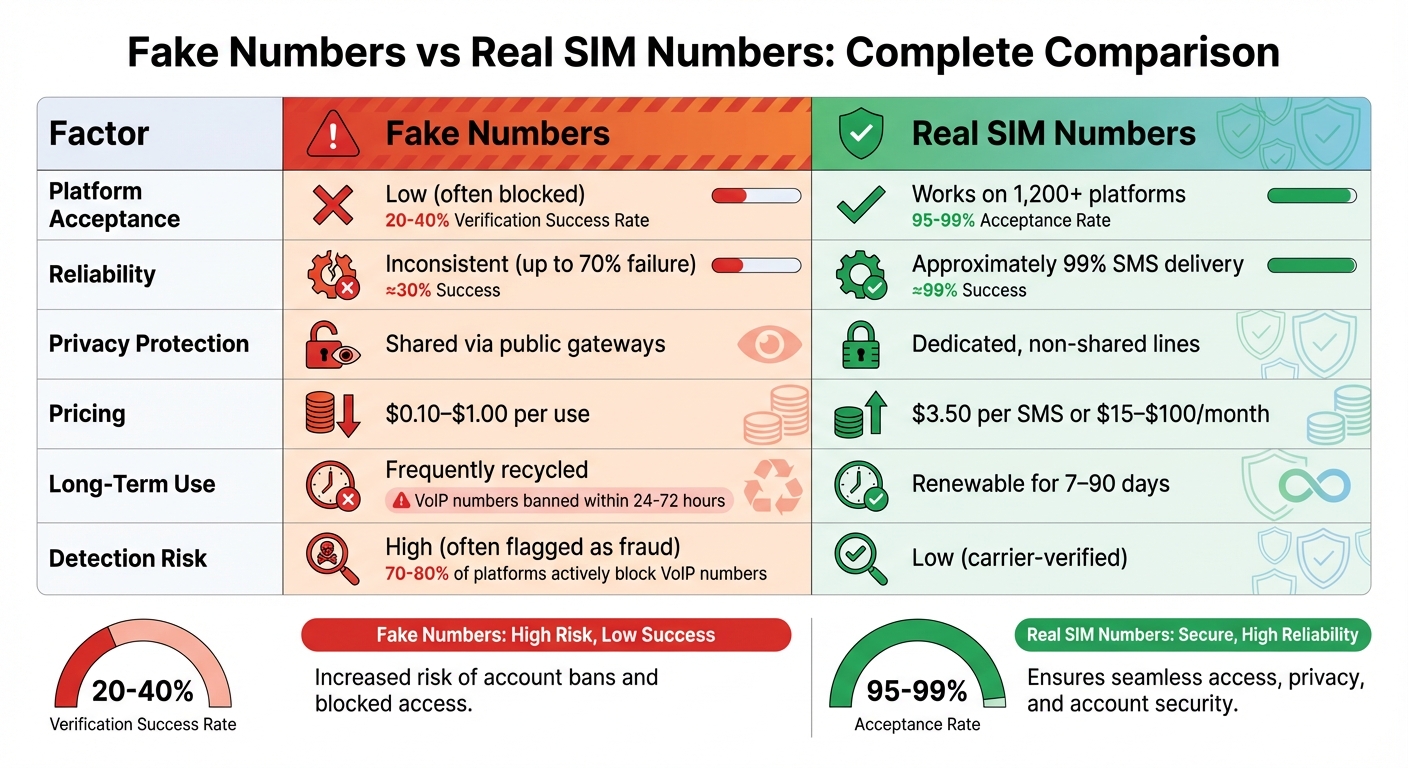
Fake Numbers vs Real SIM Numbers: Security, Reliability & Cost Comparison
Using real SIM numbers to verify accounts significantly reduces the risk of bans. These numbers are tied to physical or virtual SIM cards directly connected to major carriers like AT&T, Verizon, or T‑Mobile. Unlike VoIP numbers or online generators, real SIM numbers are recognized as legitimate by platforms, ensuring smooth verifications without triggering fraud alerts. This reliability not only simplifies the process but also helps safeguard your accounts.
Why Real SIM Numbers Are More Reliable
Real SIM numbers are backed by carrier networks, making them appear authentic to verification systems. With acceptance rates ranging between 95% and 99% on key platforms, they outperform alternatives like disposable numbers. Because they’re carrier-verified, they reliably deliver SMS codes without the risk of blacklisting – a common issue with temporary or shared numbers.
Benefits of Using Real SIM Numbers
Real SIM numbers are compatible with over 1,200 platforms, including popular services like Google, WhatsApp, Facebook, Amazon, and even banking apps that often block VoIP numbers. They come with dedicated, non-shared lines, offering greater reliability and protecting your privacy by avoiding the risks of sharing your real phone number through public SMS gateways.
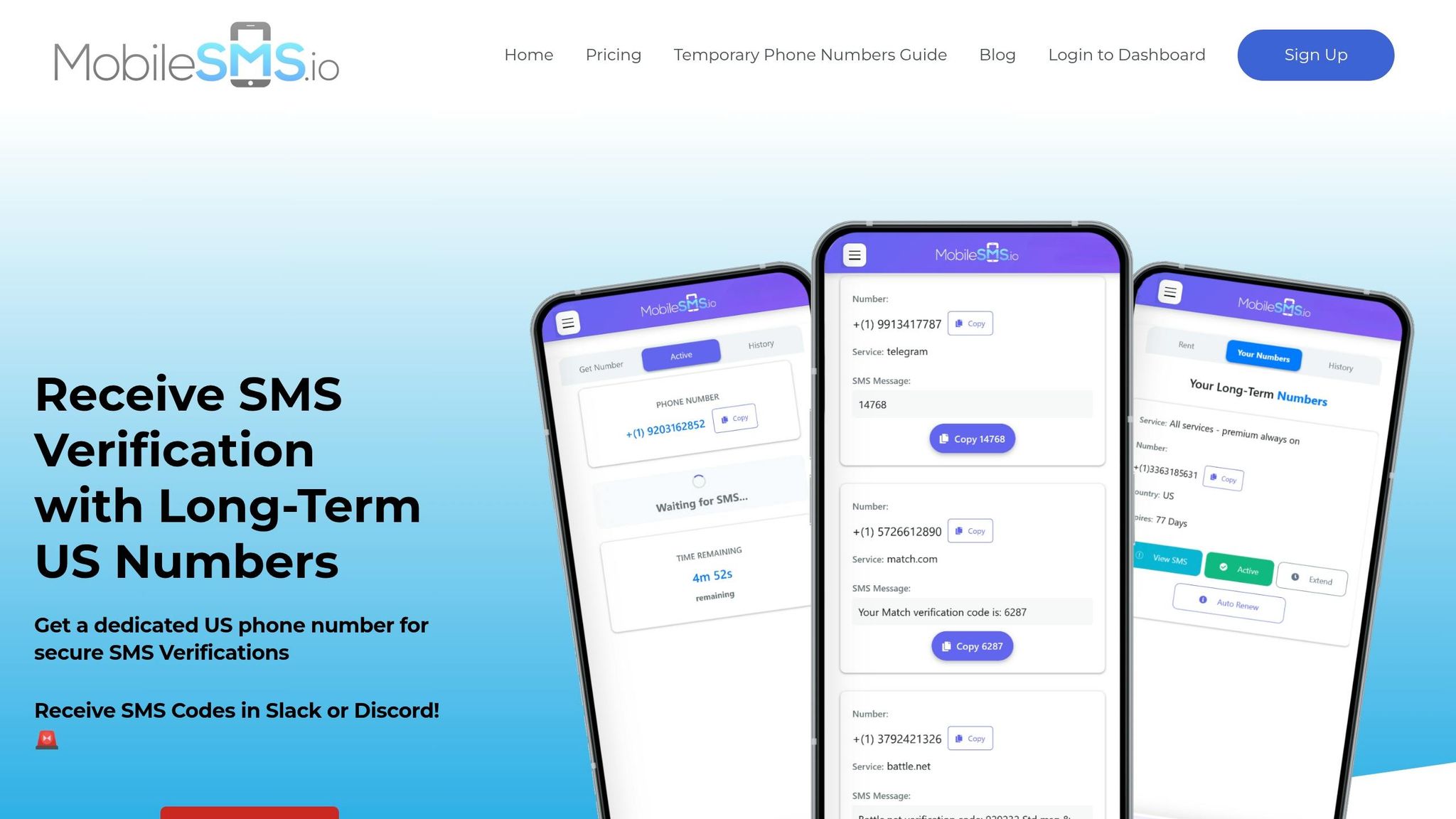
Providers like MobileSMS.io offer flexible rental plans to suit a variety of needs. Options range from one-time disposable numbers to long-term rentals spanning 7 to 90 days, with premium plans that can even integrate with tools like Slack or Discord. This adaptability is particularly useful for platforms requiring periodic re-verification, ensuring uninterrupted access to your accounts. Over time, these features provide better value compared to disposable alternatives, as shown in the cost breakdown below.
Cost Comparison: Fake Numbers vs. Real SIM Numbers
While fake numbers might seem cheaper upfront, their hidden costs – like failed verifications, frequent bans, and the hassle of creating new accounts – can quickly outweigh any savings. Here’s how they stack up:
| Factor | Fake Numbers | Real SIM Numbers |
|---|---|---|
| Platform Acceptance | Low (often blocked) | Works on 1,200+ platforms |
| Reliability | Inconsistent (up to 70% failure) | Approximately 99% SMS delivery |
| Privacy Protection | Shared via public gateways | Dedicated, non-shared lines |
| Pricing | $0.10–$1.00 per use | $3.50 per SMS or $15–$100/month |
| Long-Term Use | Frequently recycled | Renewable for 7–90 days |
| Detection Risk | High (often flagged as fraud) | Low (carrier-verified) |
Real SIM numbers not only offer better reliability but also provide peace of mind through enhanced privacy and security.
Conclusion
Fake numbers might seem like a quick fix, but the risks they bring far outweigh any temporary convenience. From account hijacking to bans and lost access to accounts or revenue, the potential consequences are serious. For instance, a data breach can expose your personal details if they are linked to a compromised account. Platforms are increasingly sophisticated, with 70–80% actively blocking VoIP numbers. Even those that initially slip through are often flagged later, leading to bans that could surface months down the line.
The reality is, disposable numbers are unreliable and risky. Advanced detection systems consistently identify and block them, making them a poor choice for anyone looking to secure their accounts.
On the other hand, real SIM numbers provide a reliable solution. These carrier-verified numbers work seamlessly across more than 1,200 platforms, bypassing fraud detection systems while maintaining your privacy through dedicated, non-shared lines. For critical accounts or long-term use, this level of dependability is a must.
If you’re curious about the downsides of fake numbers, check out our fake phone number generator explainer page.
MobileSMS.io offers real SIM numbers starting at $3.50 per verification, with long-term rental options priced between $15 and $100 per month. With a 99.7% acceptance rate, you can trust that your verifications will succeed on the first try – saving you time and frustration.
When it comes to protecting your accounts and ensuring long-term security, real SIM numbers are the way to go. Don’t risk your accounts – choose a reliable solution today.
FAQs
Can I recover an account verified with a fake number?
Accounts verified with fake numbers are typically not recoverable through standard methods. This is because fake numbers usually lack valid verification details, and platforms often flag or reject them, making recovery nearly impossible.
How can I tell if a number is VoIP or real SIM?
To spot a VoIP number, look for indicators that it’s internet-based rather than tied to a physical SIM card. Verification platforms rely on tools like carrier databases, device fingerprinting, number age, and routing patterns to confirm a number’s authenticity. Real SIM numbers typically pass these checks with a 95–99% success rate, while VoIP numbers are frequently flagged and blocked due to their virtual nature or internet-based origins.
Do real SIM rentals protect my privacy long-term?
Real SIM rentals provide a solid option for long-term privacy protection. These use carrier-backed numbers, which are generally more secure and less likely to face platform bans compared to virtual or VoIP numbers. They offer better reliability and minimize common risks, especially when combined with smart security practices.