

When choosing a phone number for account verification, real SIM numbers are the most reliable option. Platforms often reject VoIP numbers like Google Voice and TextNow because they’re flagged as less secure, with success rates of just 20–40%. In contrast, real SIM numbers, tied to carriers like AT&T, T-Mobile, or Verizon, have a 95–99% success rate and deliver codes in under 5 seconds. VoIP numbers also risk retroactive bans, making them unsuitable for critical accounts like banking or business profiles.
Key takeaways:
- Google Voice: Free, but unreliable for verifications (70–80% rejection rate).
- TextNow: Free, but suffers from number recycling and inconsistent results.
- Real SIM Numbers: Cost $0.20–$5.00 per verification but offer unmatched reliability and security.
For important accounts, spending a few dollars on real SIM verification saves time, ensures long-term access, and avoids potential account bans.
Google Voice: Benefits and Limitations for SMS Verification
Google Voice stands out because it’s completely free and doesn’t require a physical SIM card or a carrier contract. With just a Google account, you can secure a US phone number in minutes. This makes it a convenient option for casual tasks like signing up for newsletters, participating in online forums, or testing apps during development.
However, looking deeper into its functionality, Google Voice operates as a VoIP service. Instead of using traditional carrier networks like AT&T or Verizon, it relies on data connections to handle calls and texts. Because of this, carrier systems classify Google Voice numbers as VoIP, which leads to a 70–80% rejection rate on major platforms, including banks, crypto exchanges, and apps like WhatsApp.
"Major services like WhatsApp, Telegram, and Google actively block VoIP numbers due to their association with spam and fraud." – Elena Vasquez, Content Strategist, SMSConfirmed
When it comes to SMS verification, Google Voice only works 20–40% of the time on platforms with modern fraud detection systems. Even when it does work, delays of 5–10 seconds in receiving codes make it less reliable. Additionally, the 15–20% SMS failure rate means you might never receive the code at all, often with no explanation or error message.
Another concern is retroactive fraud detection. Platforms may later ban accounts created with Google Voice numbers, erasing all setup work and potentially locking you out permanently. For low-stakes tasks like creating temporary accounts or running quick tests, Google Voice can be a handy tool. But for important accounts, these challenges make it clear why real SIM numbers are often the better choice. The reliability and security of traditional carrier numbers are crucial for business or mission-critical needs.
sbb-itb-5a89343
TextNow: Benefits and Limitations for SMS Verification
TextNow offers a quick and free U.S. phone number through its app – no existing number required. Funded by ads, it works well for casual tasks like signing up for newsletters, testing apps, or creating temporary forum accounts. However, when it comes to SMS verification, TextNow has some notable challenges.
Carrier databases often classify TextNow numbers as "Fixed VoIP", which leads to automatic rejections on many platforms. Like other VoIP services, this classification makes verification results unpredictable. Platforms like banks, cryptocurrency exchanges, and services tied to high-value accounts almost always block these numbers.
"VoIP numbers are categorized differently in these databases, which is how platforms filter them out." – VoidMob
Another issue is number recycling. TextNow reassigns inactive numbers, which can lead to "number already registered" errors on services like WhatsApp or Telegram.
Privacy is another consideration. TextNow’s ad-supported model collects user data and tracks verification patterns, which could raise concerns for some users. Additionally, its reliability is limited – failed verifications can add 60–90 minutes to setup time. While it might work for casual needs, it’s not suitable for critical accounts. In those cases, using real SIM-card phone numbers is a far better option.
Real SIM Numbers: The More Reliable Option
Real SIM numbers solve many of the problems associated with VoIP verification. These numbers, provided by major carriers like AT&T, T-Mobile, and Verizon, are classified in telecom databases as either "MOBILE" or "WIRELESS" lines. This classification ensures that when platforms verify the line type before sending a code, real SIM numbers are almost always approved. In contrast, VoIP numbers often fail this process, making real SIM numbers the more dependable choice.
The key lies in how SMS messages are routed. Real SIM messages use native carrier SMSC (Short Message Service Center) paths instead of data networks. This routing indicates to platforms that the messages originate from physical devices rather than virtual services. Currently, 70-80% of major platforms block VoIP numbers using carrier lookup databases, while real SIM numbers maintain an impressive 95-99% success rate across all platforms.
"The key difference isn’t just ‘internet vs cellular’ – it’s how the number is registered in carrier databases." – VoidMob
Speed is another advantage. Real SIM numbers typically receive verification codes in under 5 seconds, whereas VoIP numbers often experience delays of 5–10 seconds or even fail 15–20% of the time. For critical accounts – think banking apps, crypto wallets, or high-value social media profiles – this kind of reliability is non-negotiable. Using VoIP numbers in these cases can even lead to retroactive account bans if fraud detection systems later flag the number.
Cost efficiency is also a factor. Real SIM verifications range from $0.20 to $5.00 per SMS, but they save significant time by avoiding the 60–90 minutes often wasted on failed VoIP attempts. For businesses managing multiple accounts or operations, these time savings quickly add up. To maximize success rates, pairing a U.S. real SIM number with a U.S.-based IP address is recommended. Additionally, sending at least one SMS per month helps keep rental lines active for the long term.
Side-by-Side Comparison: Google Voice vs TextNow vs Real SIM
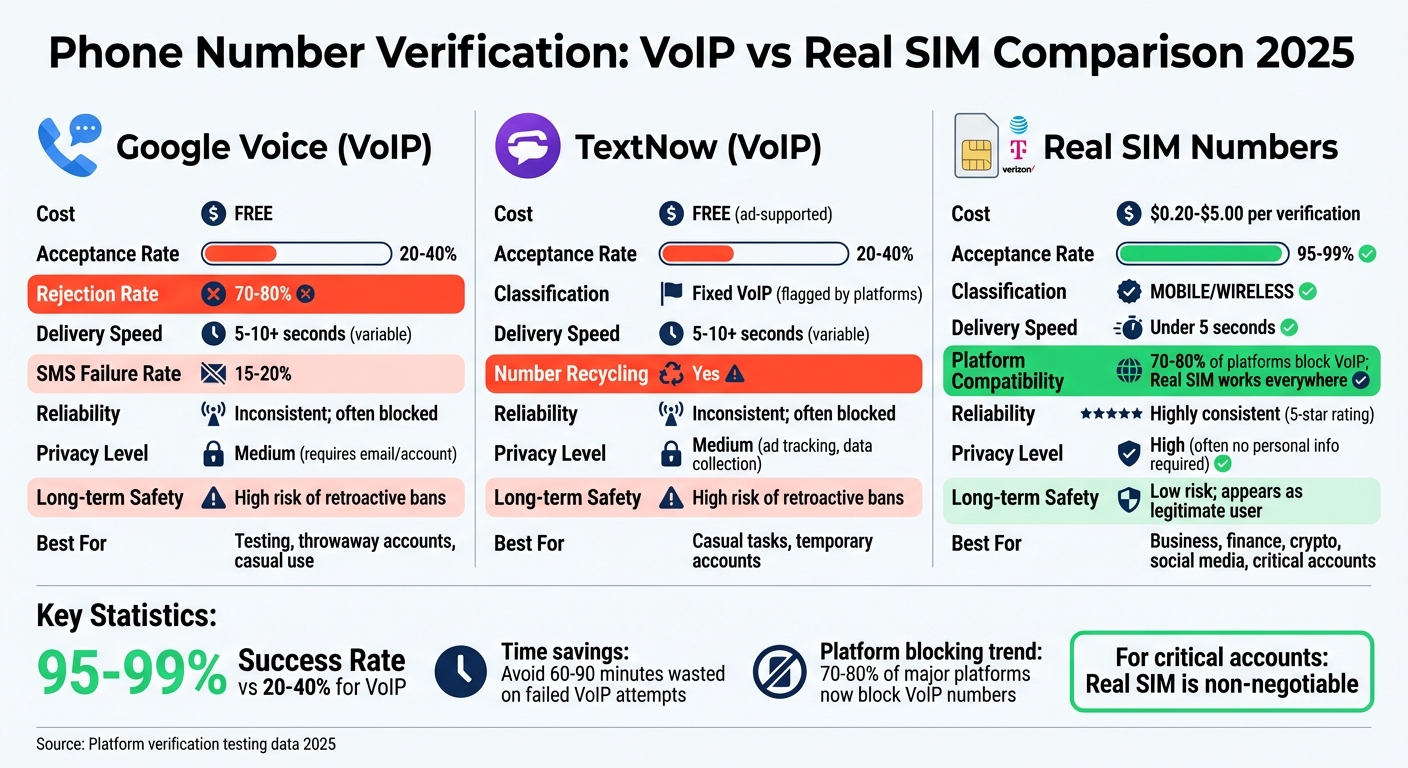
Google Voice vs TextNow vs Real SIM: Phone Number Verification Comparison 2025
Choosing between free VoIP apps and real SIM numbers becomes straightforward when you dive into the performance details. Both Google Voice and TextNow fall under the VoIP category, while real SIM numbers rely on major carriers like AT&T, T-Mobile, and Verizon. These real SIM numbers are recognized in telecom databases as either "MOBILE" or "WIRELESS" lines, giving them a significant edge in reliability and acceptance.
The difference in acceptance rates is striking. VoIP numbers are only successful 20–40% of the time on major platforms, while real SIM numbers boast a 95–99% success rate. What’s worse, when a VoIP number gets flagged as "VoIP" or "Fixed VoIP", it’s often rejected silently – no error message, no explanation.
"Major services like WhatsApp, Telegram, and Google actively block VoIP numbers due to their association with spam and fraud. Only genuine non-VoIP USA SMS numbers with real SIM cards will reliably pass verification." – Elena Vasquez, Content Strategist, SMSConfirmed
The cost comparison also tells an important story. While VoIP services range from free to $5/month, the hidden cost is your time – wasting 60–90 minutes on failed attempts. On the other hand, real SIM numbers, which cost $0.20–$5.00 per verification, deliver codes in under 5 seconds. For businesses, especially those handling financial accounts or critical verifications, this level of dependability isn’t just nice to have – it’s essential.
For a deeper dive into the benefits of real SIM numbers, check out our guide on real SIM non-VoIP numbers for verification. If you’re looking to test the waters, try our free US SMS number for quick tests.
Comparison Table
| Factor | VoIP | Real SIM (Non-VoIP) |
|---|---|---|
| Acceptance Rate | 20-40% | 95-99% |
| Cost | Free to $5/month | $0.20–$5.00 per verification |
| Delivery Speed | 5-10+ seconds (variable) | Under 5 seconds |
| Reliability | Inconsistent; often blocked | Highly consistent |
| Privacy Level | Medium (requires email/account) | High (often no personal info required) |
| Long-term Safety | High risk of retroactive bans | Low risk; appears as legitimate user |
| Best For | Testing, throwaway accounts | Business, finance, social media |
When Free VoIP Numbers Don’t Work: Situations That Need Real SIM
Free US phone numbers can be convenient, but they fall short in several critical situations where reliability is non-negotiable. For instance, financial platforms – including banks, payment processors, and crypto exchanges like Binance – almost always reject VoIP numbers. These systems use line-type verification, and VoIP numbers are automatically flagged and denied. You won’t even get an error message; your attempt will simply fail. This makes a real SIM number essential for anything beyond casual use.
When it comes to business accounts or income-related activities, the risks are even higher. Platforms may initially accept VoIP numbers, but during later fraud checks, they could retroactively ban your account. Imagine losing your content, followers, or income streams overnight. Multi-account management is also a minefield. Security systems monitor for reused VoIP numbers across accounts, flagging them as suspicious. By 2026, 70-80% of major platforms have adopted carrier lookup databases to block VoIP numbers – a trend that’s only growing as authentication requirements become stricter. For anyone managing valuable assets, upgrading to a real SIM is a must.
"Major platforms actively maintain blocklists of VoIP number ranges. Even if a virtual number works today, it may be flagged tomorrow – leaving you locked out of critical accounts." – VoidMob
The hidden downside of free VoIP numbers is the time wasted on trial-and-error setups. Real SIM numbers eliminate this hassle entirely. For a deeper dive into the benefits, check out our guide on real SIM non-VoIP numbers.
MobileSMS.io Real SIM Numbers: Pricing and Return on Investment
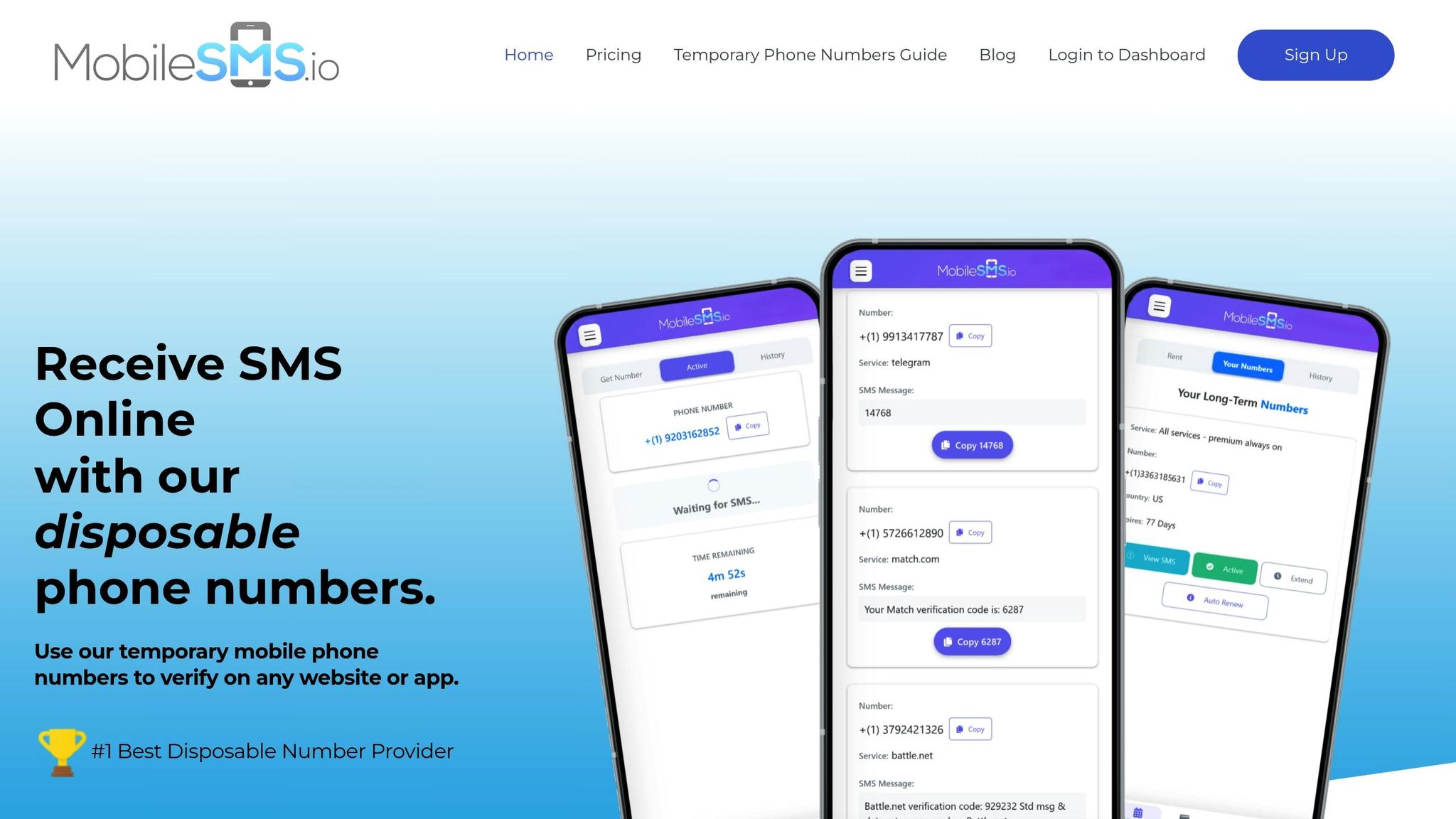
MobileSMS.io’s pricing structure is designed to cater to a range of verification needs while ensuring a strong return on investment (ROI). Here’s how it breaks down:
For users with occasional verification needs, the pay-per-success model is a practical choice. It costs between $3.50 and $5.50 per SMS and charges only when a verification code is successfully delivered. This approach eliminates unnecessary expenses on failed attempts, making it ideal for one-off tasks like verifying a PayPal account or setting up a single Instagram profile.
For those managing multiple accounts or requiring repeated use of the same number, long-term rental plans offer more value. A 30-day single-service rental costs $30 and allows unlimited SMS verifications for one platform – perfect for tasks like maintaining a dedicated WhatsApp Business account. For broader needs, the All Services Premium plan at $100 per month provides unlimited verifications across over 1,200 platforms. It also includes automatic SMS forwarding and integrations with tools like Slack or Discord, making it a great option for team-based workflows.
To illustrate the potential savings: if you’re managing 20 Instagram verifications monthly using VoIP, it could take 15 hours of work at $20/hour, costing $300. By switching to the $100 rental plan and reducing the labor to just 2 hours ($40), you save $260 each month. Plus, with a 99.7% acceptance rate for MobileSMS.io’s real SIM numbers, you’ll avoid the frustration of troubleshooting blocks or losing access to important accounts – saving even more time and ensuring a smoother operation.
For businesses like dropshipping stores or marketing agencies handling 50–100 account verifications per month, the time and effort saved by using real SIM numbers make the investment worthwhile. The potential revenue boost – over $500 monthly from successfully verified accounts – further highlights the value of these plans.
Additional perks include a 7-day money-back guarantee, a $5 minimum deposit, and credits valid for 12 months. With transparent pricing, you only pay for successful verifications, avoiding hidden fees or wasted costs. These features make MobileSMS.io a reliable and cost-effective solution for mission-critical verifications.
Conclusion: When to Switch from VoIP to Real SIM Numbers
Free VoIP numbers from services like Google Voice or TextNow are great for casual use – chatting with friends, family, or handling tasks where losing access isn’t a big deal. They’re a handy way to keep your personal number private for low-stakes activities.
However, when it comes to accounts tied to money, business operations, or anything with long-term importance, real SIM numbers are a must. Many platforms now use carrier lookup databases to block VoIP numbers, leaving them with a success rate of just 20–40%. For critical accounts – like banking apps, crypto exchanges, payment platforms like Stripe, or social media accounts of high value – you need the reliability of real SIM numbers, which offer a success rate of 95–99%.
The rule is simple: if losing access to an account could cost you time, money, or opportunities, don’t risk using a VoIP number. Platforms may even perform fraud checks months after signup, leading to retroactive bans for accounts created with VoIP numbers. For accounts tied to your income or professional reputation, this risk isn’t worth it.
Spending $3.50–$5.50 per verification or $30–$100 per month for rental plans is a small price to pay for peace of mind. It saves you from the frustration and wasted effort of failed VoIP setups. When first-time success matters, when two-factor authentication is essential, or when the stakes are high, switching to real SIM numbers is the best move. Your phone number is a key part of your digital identity, and investing in a reliable option protects you from the headaches of account lockouts.
FAQs
How can I tell if a number is VoIP or real mobile?
VoIP numbers operate over the internet and are commonly associated with services like Google Voice or TextNow. Because of this, they’re often flagged or blocked during SMS verification processes. On the other hand, real mobile numbers – those tied to physical SIM cards from carriers such as AT&T or Verizon – are far more dependable for verification purposes. To distinguish between the two, carrier lookup tools can be used to identify whether a number is VoIP or SIM-based. Real mobile numbers generally provide better reliability and a higher chance of acceptance.
Will a VoIP number that works today get my account banned later?
VoIP numbers, such as those from Google Voice or TextNow, might work for account verification initially, but they don’t guarantee protection from future bans. Many platforms flag these numbers because they’re internet-based, categorizing them as non-carrier and less dependable. In contrast, real SIM-based numbers are tied to carriers, offering more stability and a lower chance of being blocked. This makes them a better option for secure, long-term account verification.
Do I need a U.S. IP address when verifying with a U.S. real SIM?
No, you don’t need a U.S. IP address to verify using a U.S. real SIM. The verification process relies on the SIM card’s connection to the mobile network, not the IP address being used.
Related Blog Posts
- SMS Verification Guide: Choosing Between Virtual and Real Numbers
- Non-VoIP US Phone Numbers for SMS Verification: Why Free VoIP Fails (and What Works)
- Why Free VoIP Numbers Stop Receiving Verification Codes (and What to Do Next)
- Best Country to Buy Cheap SMS Verification Numbers (Without Getting Banned)