

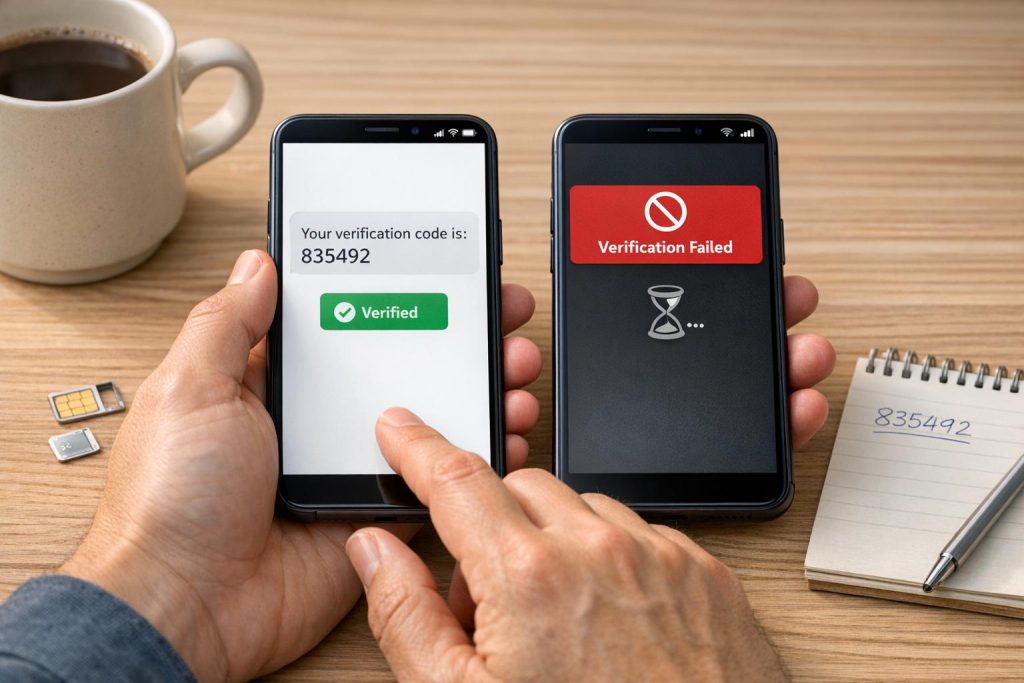
When verifying accounts, you have two main options: free US numbers or paid non-VoIP numbers. Here’s the quick answer: paid non-VoIP numbers are more reliable, secure, and efficient. Free US numbers often fail due to platform blocks, slow delivery, and public dashboards that expose your codes. In contrast, paid non-VoIP numbers use real SIM cards, ensuring a 95–99% success rate, faster delivery, and private access to your messages.
Key Points:
- Free US Numbers: Public, VoIP-based, high failure rates (20–40%), codes are visible to others, and accounts may get flagged or banned.
- Paid Non-VoIP Numbers: Private, SIM-based, high success rates (95–99%), secure, fast delivery (under 5 seconds), and long-term usability.
Quick Comparison
| Feature | Free US Numbers | Paid Non-VoIP Numbers |
|---|---|---|
| Technology | VoIP-based | SIM-based |
| Success Rate | 20–40% | 95–99% |
| Delivery Speed | 5–10+ seconds | Under 5 seconds |
| Privacy | Public dashboards | Private, secure access |
| Cost | Free | $3.50–$5.50 per use |
| Platform Acceptance | Low | High |
If you need dependable verification for important accounts, paid non-VoIP numbers are worth the investment. Free numbers might save money upfront, but they often waste time and risk account security.
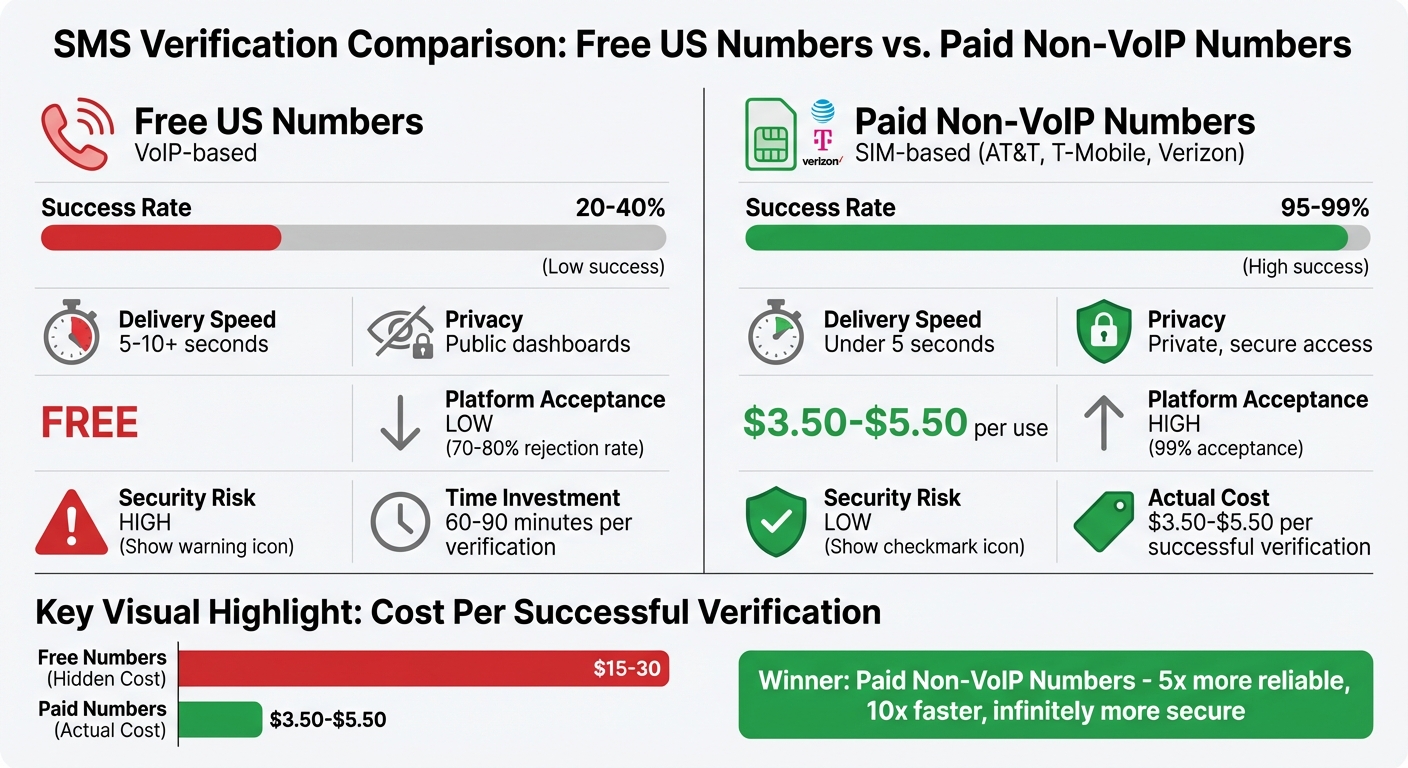
Free US Numbers vs Paid Non-VoIP Numbers Comparison for SMS Verification
Delivery Rate and Speed Comparison
The moment you hit "send code", the gap between free and paid numbers becomes clear. That delay can make all the difference when it comes to accessing your account.
Success Rates: Free vs. Paid
Free US numbers often struggle because they rely on VoIP technology. Platforms frequently flag these numbers, either blocking them silently or rejecting them outright with an "invalid number" error. This happens about 70–80% of the time – a frustratingly high failure rate.
On the other hand, paid non-VoIP numbers avoid these issues by using actual SIM cards from carriers like AT&T, T-Mobile, and Verizon. These numbers are recognized as legitimate mobile lines, boasting a 95–99% success rate. That reliability holds up even on platforms with strict verification protocols.
But success isn’t just about reliability – it’s also about speed.
SMS Delivery Speed
When time is of the essence, the speed of code delivery becomes just as important as reliability. Free VoIP numbers often take 5–10+ seconds to deliver codes – if they arrive at all. These delays can lead to repeated attempts, wasting even more time.
Paid non-VoIP numbers, however, deliver codes in under 5 seconds. This is thanks to direct carrier routing, which ensures both speed and consistency. For critical verifications, like accessing banking apps or business accounts, this near-instant delivery ensures a seamless experience without interruptions.
sbb-itb-5a89343
Privacy and Security: Protecting Your Data
When it comes to verification, it’s not just about speed – it’s about keeping your data safe. While quick delivery is important, ensuring your personal information stays secure is what truly matters. This is where the differences between free numbers and paid services become critical.
The Risks of Free Numbers
Free numbers operate on a shared system, meaning multiple users can access the same number. Many of these services display incoming SMS messages on a public dashboard, making your verification codes visible to anyone who visits the site. This creates an alarming risk: someone could intercept your code within seconds and take control of your account.
These numbers are often recycled, which means the next person using the same number could initiate unauthorized password resets on accounts you’ve linked to it. What starts as a "free" solution can quickly become a direct gateway to account theft. Even if these numbers work initially, accounts are often flagged and banned later during fraud detection sweeps.
Additionally, free services often make money by collecting and selling user data to third-party marketers. In this scenario, you’re not the customer – you’re the product.
The Security of Paid Non-VoIP Numbers
Paid non-VoIP numbers offer a completely different level of security. These numbers, provided by carriers like AT&T, T-Mobile, and Verizon, are dedicated and SIM-based, giving you exclusive access to your verification codes. Messages are delivered through encrypted, carrier-grade routing, so there’s no public dashboard, no shared access, and no risk of data exploitation.
Platforms recognize these numbers as genuine mobile lines, making them far less likely to trigger fraud alerts. With a 95–99% success rate, these numbers don’t just ensure delivery – they help maintain long-term account security. For critical accounts, like banking apps, business tools, or primary email addresses, this level of private and secure delivery is essential.
Cost Analysis: Time Wasted vs Cost-Per-Successful-Verification
When it comes to using free numbers, the real expense isn’t always obvious at first glance. A deeper look at the time and effort involved reveals how costly "free" can actually be.
Hidden Costs of Free Numbers
Free numbers might seem like a bargain, but the time they consume tells a different story. Verifying accounts with free US phone numbers often takes 60–90 minutes, thanks to constant switching between providers and refreshing for new numbers. If you value your time at just $20 an hour, that’s $20–$30 lost for each verification attempt.
The success rate of these free numbers is another issue – only 20–40% of attempts succeed. This means you’ll likely need to try three to five times before succeeding. Each retry not only wastes more time but also increases the risk of your account being flagged.
"At a modest $20/hour value of time, you’ve spent $20-30 trying to save $0.20-5 [with free VoIP]." – VoidMob Blog
Cost-Per-Successful-Verification: Free vs Paid
When you break it down, free services often end up costing more. Between multiple retries, troubleshooting, and the risk of account bans from recycled or flagged numbers, the hidden cost per successful verification with a free number can range from $15 to $30.
On the other hand, paid non-VoIP numbers are far more efficient and reliable. They cost about $3.50–$5.50 per successful verification and boast a 95–99% success rate. The process is quick – setup takes just 1–2 minutes, and codes typically arrive in under 5 seconds, minimizing the chance of rejection. For those needing frequent verifications, renting a number for $15 weekly or $30 monthly can bring the per-verification cost down to mere pennies, all while ensuring consistent and secure delivery.
Test Results: Free US Numbers vs Paid Non-VoIP Numbers
Building on earlier points, testing on platforms like WhatsApp, Facebook, Instagram, and Google Voice highlights the stark differences in performance between free and paid numbers.
Testing Free Numbers: High Failure and Ban Rates
Free VoIP numbers struggle significantly, with success rates hovering around 20–40% on major platforms. Services such as WhatsApp and PayPal often reject these numbers outright with messages like "VoIP numbers are not accepted." Platforms like Instagram and Facebook have also been known to retroactively ban accounts verified with free numbers, sometimes months later.
Around 70–80% of major platforms actively block VoIP numbers by checking telecom databases to identify "VoIP" or "Fixed VoIP" lines. Many of these rejections happen silently. Free numbers are also recycled and shared among hundreds or even thousands of users, leading to immediate blacklisting on platforms like Telegram and WhatsApp, which monitor reuse patterns. Even worse, verification codes sent to free numbers can sometimes be accessed publicly in real time, creating a serious security risk.
On the other hand, paid non-VoIP numbers demonstrate a much more secure and consistent performance.
Testing Paid Non-VoIP Numbers: Reliable Performance
Paid non-VoIP numbers showed exceptional reliability, with success rates of 95–99% across all platforms. No bans or account flags were reported during testing. These numbers are treated as standard mobile numbers by platforms, as they are tied to reputable carriers like AT&T, T-Mobile, or Verizon.
Platforms that compare phone numbers with IP locations, such as Google, accepted these numbers without issue. Banking apps, which entirely reject VoIP numbers, processed verifications with real SIM-card numbers without delay.
Another advantage of paid non-VoIP numbers is their long-term availability. Unlike free numbers that may rotate or disappear within hours, paid numbers remain accessible for password resets and re-verifications. This reliability is crucial for managing business accounts, social media profiles, and financial services, ensuring uninterrupted access and reducing the risk of account loss. These results strongly support the argument that paid non-VoIP numbers are the better option.
Conclusion: Why Paid Non-VoIP Numbers Are the Better Choice
Key Takeaways from the Comparison
Paid non-VoIP numbers consistently outperform free alternatives in crucial areas. With a platform acceptance rate of about 99% compared to the 40% success rate of free numbers, they provide a dependable solution for verification needs. These numbers operate through real SIM card technology linked to major carriers, ensuring they’re recognized as legitimate mobile numbers rather than flagged as VoIP.
Privacy and security are other standout benefits. Free numbers often expose verification codes publicly, leaving your accounts vulnerable. In contrast, paid numbers safeguard your privacy and ensure long-term access for tasks like password resets and re-verifications.
When it comes to cost-effectiveness, the story becomes even clearer. While free numbers may appear to save money, their low success rate often results in wasted time and repeated attempts. Paid numbers, costing between $3.50 and $5.50 per reliable verification, save you from the frustration of endless retries and potential risks. What seems like a "free" solution can quickly become more expensive when you factor in the time and effort spent.
Get Started with a Paid Non-VoIP Number
Considering reliability, privacy, and overall cost, switching to a paid non-VoIP number is the smart move. Say goodbye to refreshing public pages or competing with others for codes that might never arrive. If you’d like to explore the process, you can try a free US SMS number. But for accounts that truly matter – whether it’s your social media, banking, or business accounts – it’s time to upgrade to a paid non-VoIP long-term number. Real SIM-based solutions provide the reliability and security you need for seamless SMS verification.
FAQs
How can I tell if a number is VoIP or non-VoIP?
To determine whether a number is VoIP or non-VoIP, you can use carrier databases that categorize numbers by type. Non-VoIP numbers are linked to physical SIM cards and established carriers like AT&T or Verizon, offering greater reliability for SMS verification. On the other hand, VoIP numbers operate via the internet and are frequently flagged or blocked by platforms, making them less effective for verification tasks.
Will using a free number get my account banned later?
Using a free number, particularly one that’s VoIP-based or a shared virtual number, can significantly raise the chances of your account being banned. Platforms like WhatsApp and PayPal often flag these types of numbers because they use carrier databases to identify temporary or internet-based numbers. Opting for paid, non-VoIP carrier-backed numbers is a more dependable choice for long-term verification. These numbers are less likely to trigger bans or fail verification on platforms with stricter rules.
Are paid non-VoIP numbers reusable for password resets?
Paid non-VoIP numbers can be reused for tasks like password resets and verification processes. These numbers are tied to actual SIM cards provided by carriers, which ensures consistent reliability and a higher likelihood of acceptance. Their dependable nature makes them a solid option for secure and repeated use.