

When choosing a phone number for SMS verification, the key decision is between free VoIP numbers (like TemporaryPhoneNumber.com) and paid non-VoIP numbers (like MobileSMS.io). Here’s the quick breakdown:
- Free VoIP numbers: Shared, public, and often rejected by major platforms (94% rejection rate). Messages are visible to everyone, posing privacy and security risks. Best for low-risk, disposable tasks like testing apps.
- Paid non-VoIP numbers: Private, real SIM-card numbers with a 99.7% platform acceptance rate. Ideal for important accounts like banking, social media, and business tools. Messages are secure and visible only to you.
Quick Comparison
| Feature | TemporaryPhoneNumber.com (Free) | MobileSMS.io (Paid) |
|---|---|---|
| Number Type | VoIP (shared, public) | Real SIM-card (private) |
| Platform Acceptance | ~40% | 99.7% |
| Privacy | Public messages | Private dashboard |
| Account Ban Risk | High | Low |
| Cost | Free | From $3.50 per SMS |
| Use Cases | Low-risk, disposable tasks | Important, long-term use |
For quick, throwaway tasks, free VoIP numbers may suffice. But for any account you care about, paid non-VoIP numbers are the safer and more reliable choice.
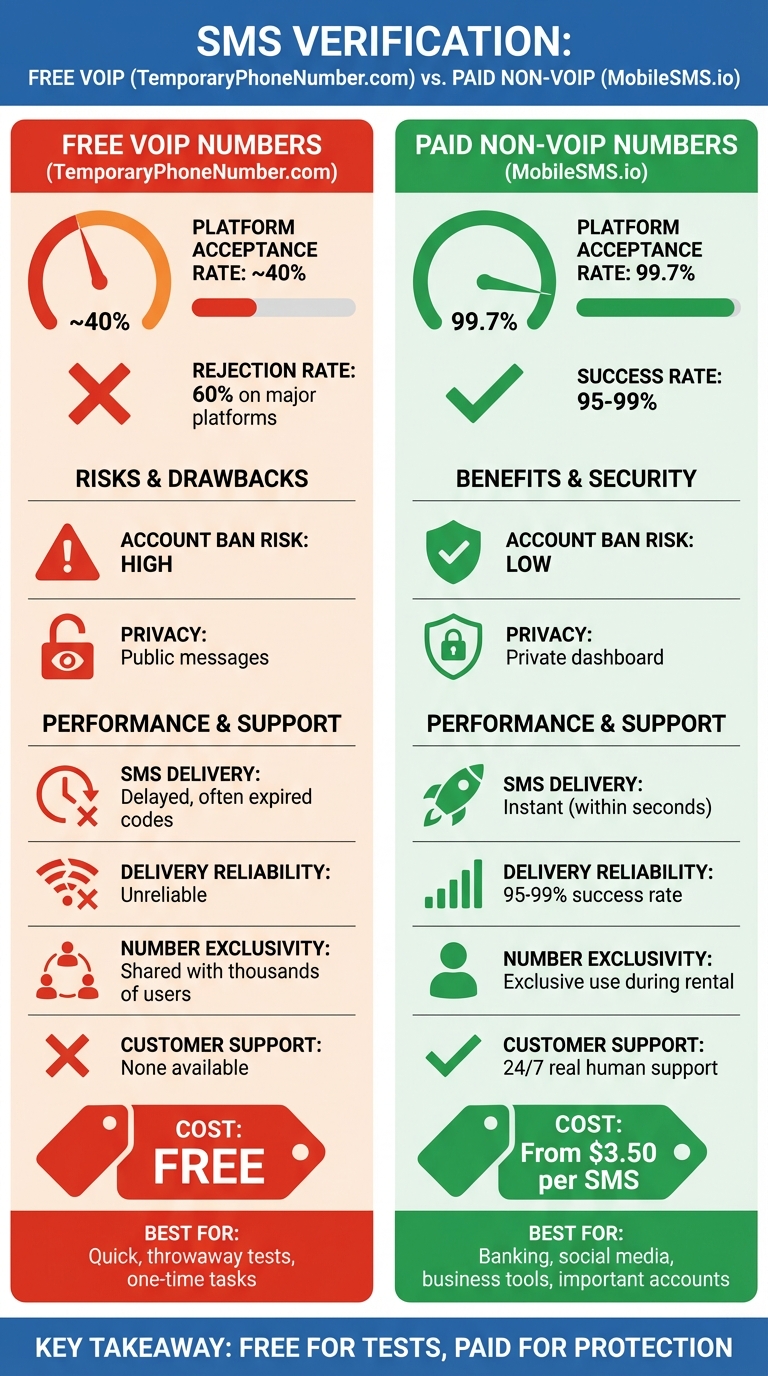
Free VoIP vs Paid Non-VoIP SMS Verification Comparison
What Is TemporaryPhoneNumber.com?
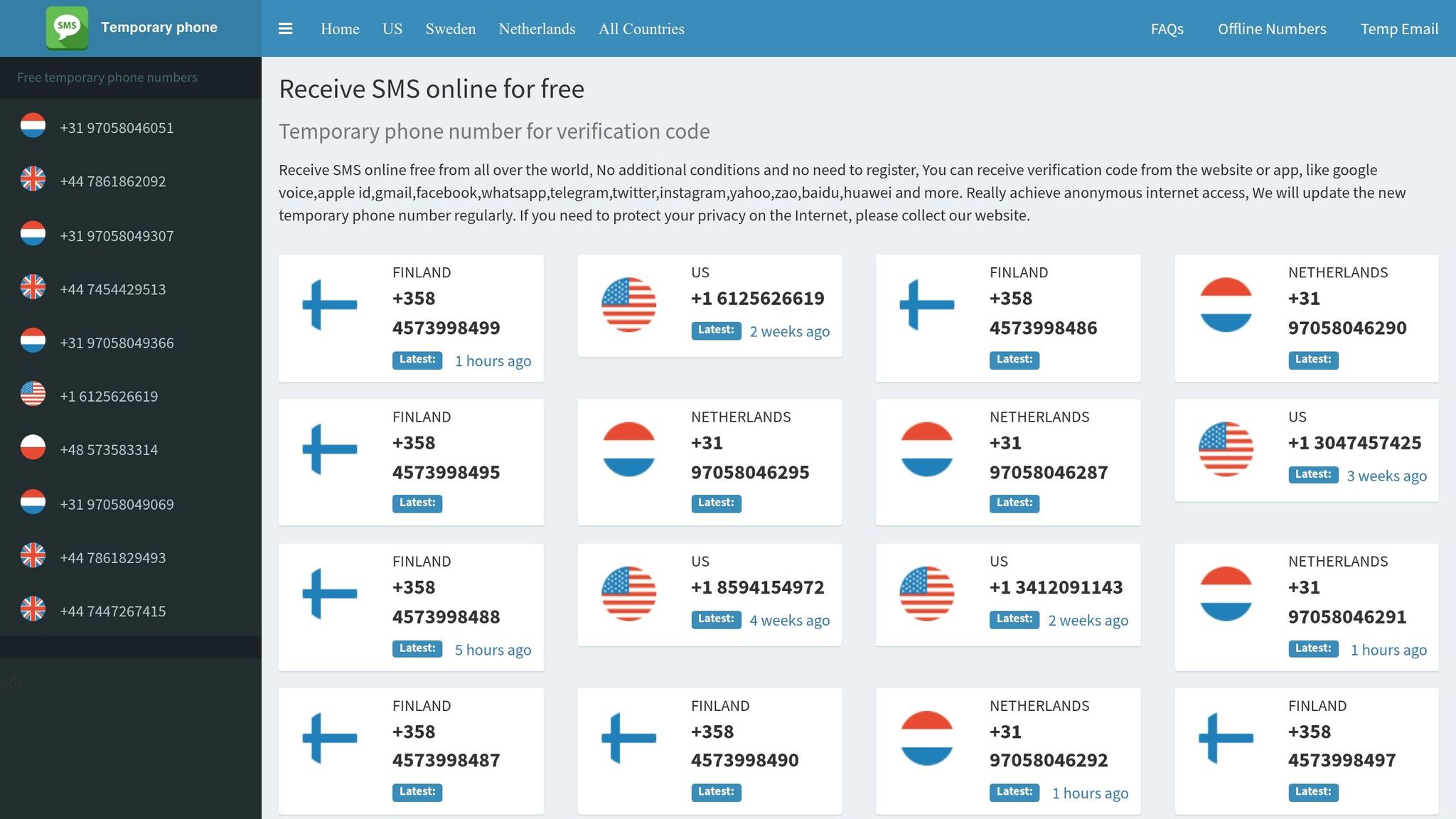
TemporaryPhoneNumber.com offers free, shared VoIP numbers for SMS verification, displaying incoming messages on a public dashboard. These are virtual numbers, not tied to physical SIM cards, and are accessible to anyone with an internet connection. The service is popular because it’s quick, free, and requires no commitment.
How Shared Public Numbers Work
Here’s the catch: these numbers are shared by thousands of users at the same time. When you choose one, you’re not the only person using it – dozens, if not hundreds, of others might also be receiving verification codes to that number. And every message is visible to anyone viewing the public dashboard.
This setup leads to several problems. Platforms quickly identify these numbers as shared VoIP lines and blacklist them. As a result, services like Facebook, WhatsApp, Amazon, and banking apps often reject these numbers outright due to their history of spam, fraud, or misuse. If a verification attempt fails, repeated tries can flag your IP address and digital fingerprint, making future verifications even harder.
Privacy is another major concern. Since all messages are public, someone else could grab your verification code before you do. This opens the door for others to potentially access the account you’re trying to create. Even worse, your activity could be associated with whatever the previous users did with that number – if it was used for spam or violations, your new account might inherit that reputation. These risks highlight why private, dedicated numbers are crucial for sensitive or long-term use.
When Free VoIP Numbers Make Sense
Free VoIP numbers are only suitable for very specific situations. They work well for one-time tests or disposable verifications where security doesn’t matter – like testing an app’s functionality or signing up for a quick download that requires SMS verification. Developers, for instance, might find them handy for testing SMS features.
The golden rule: use free shared VoIP numbers only for low-risk tasks where it doesn’t matter if the account gets banned or accessed by others. Avoid using them for anything involving personal details, financial data, or accounts you plan to use long-term. Since anyone can see the messages, make sure the service you’re signing up for doesn’t send sensitive information in the SMS.
For important accounts – like your main email, social media profiles, payment apps, or anything work-related – shared numbers are simply too risky. In these cases, opting for services that provide dedicated private numbers is the safer choice.
sbb-itb-5a89343
What Is MobileSMS.io?
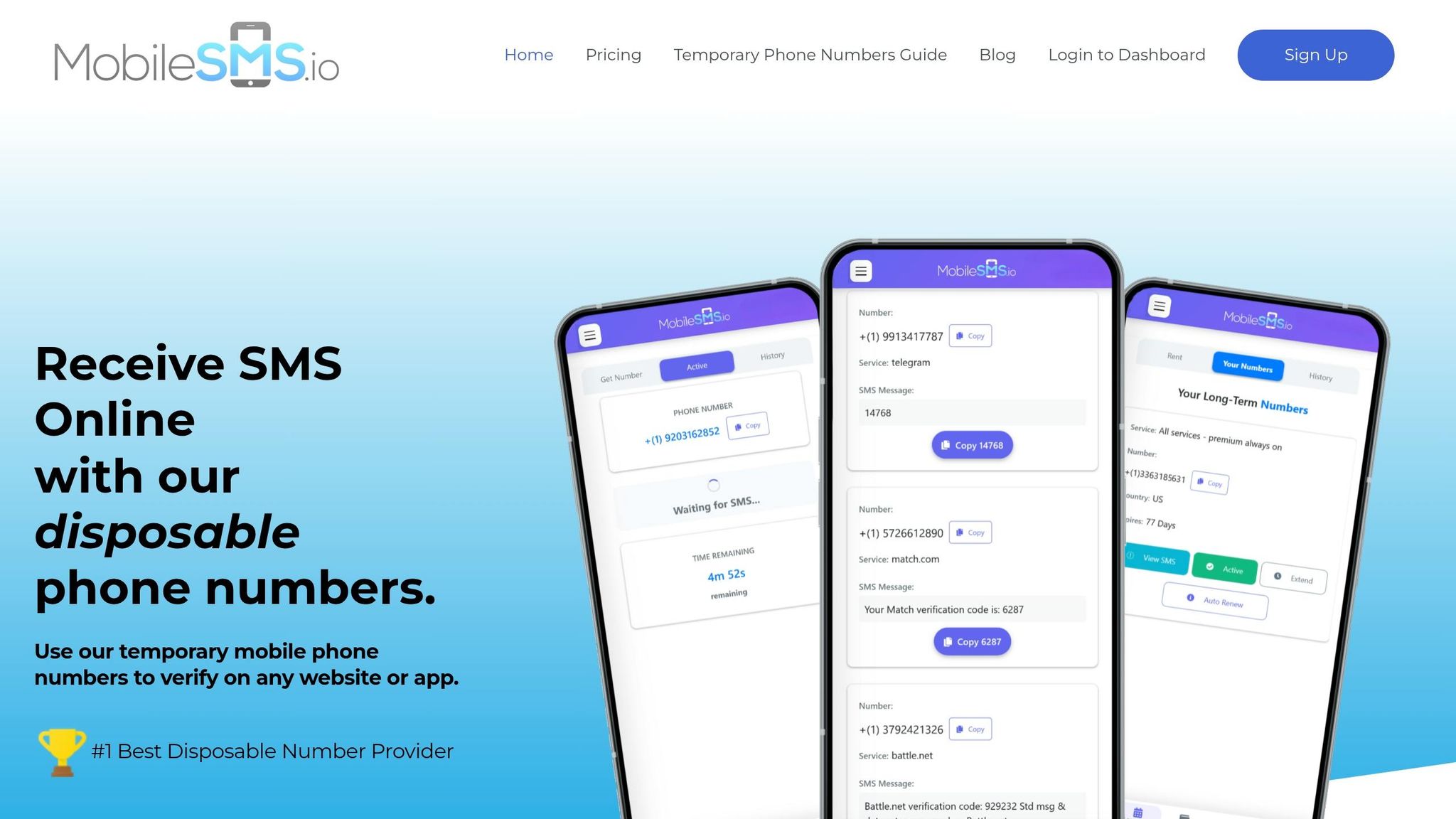
MobileSMS.io is a paid service offering carrier-backed phone numbers (see how it compares to Textverified) designed for secure SMS verification. Supporting over 1,200 platforms across 100+ countries, it provides both one-time disposable numbers (starting at $3.50 per SMS) and long-term rentals. Rental options range from $15 for a week to as much as $450 for extended use, with complete privacy guaranteed during the rental period.
Why Real SIM-Card Numbers Are More Reliable
Real SIM-card numbers have a clear edge over VoIP alternatives. These numbers connect directly to cellular networks and are listed in carrier databases, making them far more likely to pass verification processes. With a 95–99% success rate, they’re widely accepted by banks, cryptocurrency exchanges, messaging apps like WhatsApp, and financial platforms. In contrast, VoIP numbers often fail these checks.
The technology behind real SIM numbers also sets them apart. They use SS7 protocols for SMS delivery, which are more secure and reliable than the SIP protocols used by VoIP services. This technical difference ensures fewer rejections and a smoother verification experience, which is integral to the flexible plans MobileSMS.io offers.
What MobileSMS.io Provides
MobileSMS.io caters to diverse SMS verification needs with a variety of rental options. If you need a number for a one-time verification, you can opt for a disposable number. For ongoing requirements, longer rentals are available: 7 days for $15, 30 days for $30, with extended plans and API access for more advanced use cases. You can renew your rental indefinitely to keep the same number.
For businesses or users needing continuous account verifications, the Premium All Services plan is an option at $100 per month. This plan allows you to receive verification codes from any supported platform automatically, without manual activation. It also includes integrations with Slack and Discord for team collaboration, as well as API access for bulk verifications.
When Paid Non-VoIP Numbers Are Essential
There are situations where using paid real SIM numbers is the only viable choice. For accounts involving sensitive or critical information – such as banking apps, payment processors, business accounts, or encrypted messaging services – secure verification is a must. Free shared numbers are often blocked or can lead to account suspensions, posing unnecessary risks.
Long-term rentals are especially useful for accounts requiring re-verification or two-factor authentication. They ensure uninterrupted access to essential services by providing a dedicated, reliable number for all verification needs. This approach not only secures your accounts but also offers peace of mind in maintaining access to critical platforms. Up next, we’ll dive into how privacy plays a role in SMS verification.
Privacy: Shared Public vs Dedicated Private Numbers
Building on earlier discussions about account safety, privacy is another key area where shared public and dedicated private numbers differ significantly.
Privacy Problems with Shared Public Numbers
Using shared public numbers can expose your verification codes and other sensitive information to anyone who accesses the service. For example, platforms like TemporaryPhoneNumber.com display SMS codes openly, making your data accessible to strangers.
The risks don’t stop there. Shared numbers can later be exploited for account recovery or password resets, creating a potential route for account takeovers. This is especially concerning for platforms that rely heavily on phone numbers for account recovery.
Another issue is unwanted cross-account linking. Since these numbers are used by thousands of people, platforms might flag your account as suspicious or even associate it with activities from previous users. This can lead to complications or restrictions on your account.
Privacy Protection with Dedicated Private Numbers
Dedicated private numbers, like those offered by MobileSMS.io, provide a completely different level of privacy. When you rent one, it’s exclusively yours for the rental period, ensuring no one else can access your messages. Your verification codes are securely stored in your private dashboard, accessible only with your login credentials.
These numbers are real SIM-card phone numbers that aren’t listed publicly or recycled into spam databases. This ensures your accounts remain isolated from others’ activities and reduces the chances of being flagged by platforms for using a recycled number. Additionally, keeping your personal number off public databases minimizes spam, phishing attempts, and unwanted tracking. The comparison table below highlights the differences clearly.
Privacy Comparison Table
| Feature | TemporaryPhoneNumber.com | MobileSMS.io |
|---|---|---|
| Message Visibility | Publicly visible to all visitors | Private; visible only to you |
| Number Exclusivity | Shared with thousands of users | Exclusive use during rental period |
| Data Security | High risk of data collection | No logging or resale of data |
| Account Takeover Risk | High (recovery codes accessible) | Low (exclusive private access) |
| Spam Exposure | High (publicly listed numbers) | Low (private and secure) |
| Re-verification Support | Impossible (numbers rotate) | Available with long-term rentals , such as when using a long-term burner number for Ubisoft or other gaming platforms |
Account Safety: Free Risks vs Paid Reliability
When it comes to protecting your accounts, safety is just as crucial as privacy. For accounts that matter, reliability and dependable support aren’t just nice-to-haves – they’re essential. The safety of your accounts often depends on factors like platform acceptance and the risk of bans, which can vary significantly between free and paid services.
Platform Acceptance Rates and Ban Risks
Using free VoIP numbers from services like TemporaryPhoneNumber.com comes with a 60% rejection rate on major platforms. Why? Apps like WhatsApp, Amazon, Facebook, and even banking services actively block VoIP numbers because they’re flagged in anti-fraud databases. Even if you manage to get past this hurdle, shared numbers often carry a history of misuse, leading to immediate bans.
On the other hand, MobileSMS.io offers real SIM-card numbers with a 99.7% platform acceptance rate across over 1,200 services. These numbers are carrier-backed, meaning they aren’t flagged as VoIP. Platforms recognize them as legitimate phone numbers, significantly reducing the risk of rejection. Plus, since you’re the sole user of the number during your rental period, there’s no shared history to raise red flags. This exclusivity ensures a much lower chance of bans, as platforms see a clean, dedicated number rather than one recycled through countless users.
SMS Delivery Speed and Customer Support
Free services often struggle with SMS delivery, leaving you waiting for codes that may arrive too late – or not at all. And when things go wrong? You’re on your own. There’s no support to help you troubleshoot or recover.
Paid services like MobileSMS.io, however, deliver codes within seconds to your private dashboard. If something doesn’t work as expected, their 24/7 customer support team is there to assist. They even back their service with a 7-day money-back guarantee, charging you only when an SMS is successfully delivered. Compare that to free services, where failed verifications can cost you valuable time – or worse, lock you out of your accounts entirely.
Account Safety Comparison Table
| Feature | TemporaryPhoneNumber.com | MobileSMS.io |
|---|---|---|
| Platform Acceptance Rate | ~40% (frequently blocked) | 99.7% (real SIM-card numbers) |
| Account Ban Risk | High (shared number history) | Low (exclusive, clean numbers) |
| SMS Delivery Speed | Delayed; often expired codes | Instant (within seconds) |
| Delivery Reliability | Unreliable | 95-99% success rate |
| Customer Support | None available | 24/7 real human support |
| Money-Back Guarantee | Not offered | 7-day guarantee |
| Number Type | VoIP (internet-based) | Real physical SIM cards |
When to Use Free VoIP vs Paid Non-VoIP
Deciding between free VoIP and paid non-VoIP numbers depends on how important the account is to you. Let’s break it down:
Free VoIP: Best for Quick, Low-Stakes Tests
Free VoIP numbers, like those from TemporaryPhoneNumber.com, are great for one-time, low-risk situations. Think of scenarios where the account has no long-term value, like testing a website or signing up for a service you don’t plan to revisit.
However, there’s a big downside: these numbers can’t be reused. Since they’re shared and public, platforms may lock you out if they require re-verification or send a security check. This makes free VoIP numbers unreliable for anything beyond simple, temporary uses. If the account has any importance, paid non-VoIP numbers are the better option.
Paid Non-VoIP: Essential for Important Accounts
For accounts that matter – whether they store personal data, impact your income, or require ongoing access – paid non-VoIP numbers from MobileSMS.io are the safer choice. This includes banking apps, social media profiles, messaging platforms like WhatsApp, e-commerce accounts, and business tools.
With real SIM-card numbers, you avoid the risks tied to free services. Paid non-VoIP numbers offer a 99.7% acceptance rate, instant SMS delivery, and the ability to reuse the same number. If you need consistent access or manage multiple accounts, this option gives you the reliability and control you need. For even more stability, you can upgrade to a private long-term number for weeks or months of uninterrupted access.
Use Case Comparison Table
Here’s a quick overview to help you decide:
| Scenario | Free VoIP Acceptable? | Paid Non-VoIP Required? | Why? |
|---|---|---|---|
| Throwaway Website Test | Yes | No | Low risk; no long-term value. |
| Banking & Finance Apps | No | Yes | High rejection risk; potential identity theft. |
| Primary Social Media | No | Yes | Platforms block VoIP; risk of bans. |
| WhatsApp/Telegram | No | Yes | Requires carrier-backed numbers. |
| E-commerce (Amazon/eBay) | No | Yes | VoIP often blocked to prevent fraud. |
| Dating Apps | No | Yes | Safety concerns; VoIP rejection. |
| Business/Freelance Tools | No | Yes | Needs a stable, professional identity. |
| Account Recovery | No | Yes | Consistent access to the same number is essential. |
This table highlights why free VoIP works for quick, low-risk tasks, while paid non-VoIP is the go-to for anything involving security, reliability, or long-term use.
Final Verdict: Free for Tests, Paid for Protection
After examining risks of sharing your real phone number and account safety, here’s the bottom line: your risk level determines whether you go with free VoIP or invest in paid non-VoIP services.
Free services, like TemporaryPhoneNumber.com, are fine for quick, low-risk tasks – think one-time sign-ups or trials where losing access won’t matter. These numbers don’t cost a dime, but they come with trade-offs: a 60% acceptance rate, no privacy safeguards, and no support for re-verification.
If you’re dealing with important accounts, it’s worth paying for real SIM numbers from MobileSMS.io. Whether it’s banking apps, social media accounts, WhatsApp, or business tools, these accounts demand a higher level of security and reliability. MobileSMS.io offers a 99.7% acceptance rate, instant SMS delivery, and the option to keep the same number for weeks or months. This ensures you’re protected from account lockouts, identity theft, or bans.
Want to give it a try? Test a free option with an example of a free US number – ideal for low-risk trials. When you’re ready to prioritize security, upgrade to a private long-term number starting at $15 for seven days, with options for extended durations up to 90 days or more.
The difference in acceptance rates and security features makes the choice simple: free VoIP is for throwaway tasks, while paid non-VoIP is your go-to for protection. When security is on the line, investing in reliability and exclusive access is the smarter move.
FAQs
Why do platforms reject VoIP numbers?
Platforms often reject VoIP numbers because they operate over the internet rather than being linked to physical cellular networks. This makes them easier to identify and flag as less secure. Many services block these numbers to reduce the risk of fraud and misuse, as VoIP numbers are frequently associated with temporary or disposable purposes. To ensure reliable account verification, platforms typically favor SIM-based numbers, which offer greater security and are less likely to be declined.
Can someone else see or reuse my SMS code?
Using shared or public numbers, especially with free services, comes with risks. These numbers are often less secure and more likely to be reused or intercepted. If you’re handling sensitive accounts or need long-term verification, it’s better to use dedicated, real SIM-based numbers. They offer stronger privacy and reduce the chances of reuse or interception.
Do I need a long-term rented number for 2FA?
For two-factor authentication (2FA), using a long-term rented number is a smart choice for stability, security, and ease of reuse. These real, SIM-based numbers offer stronger protection against threats like SIM swapping, making them a safer option for accounts that matter most to you. While disposable numbers can handle quick, one-time verifications, they aren’t dependable for continuous use. Opting for a long-term number ensures reliable access and added security for your important accounts.