

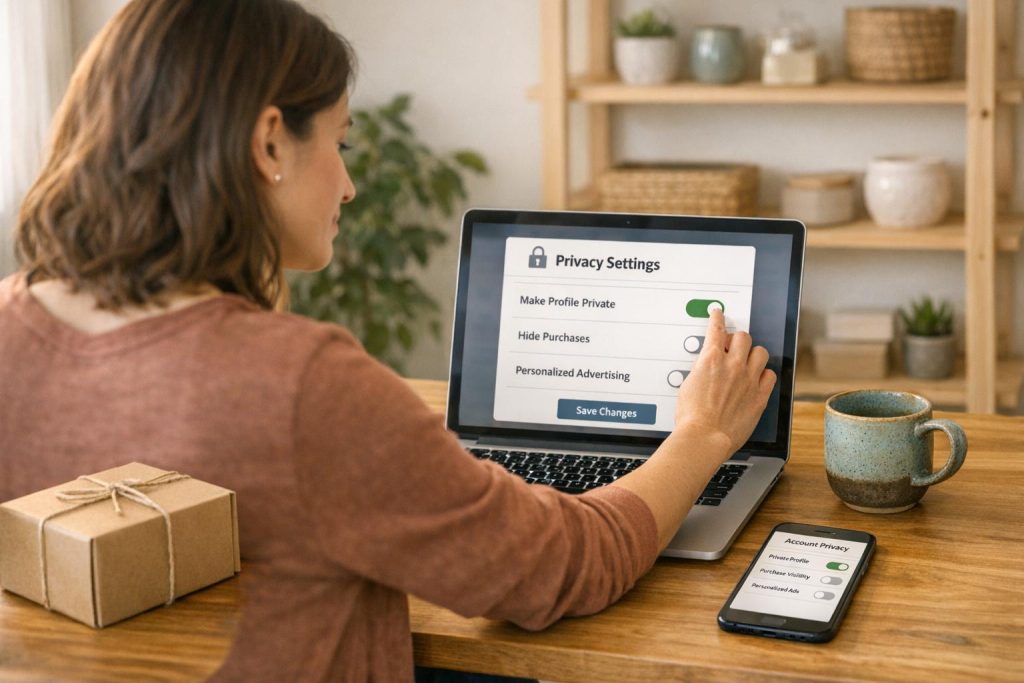
Etsy handles large volumes of personal and financial data from buyers and sellers daily. Here’s what you need to know about how your data is collected, used, and protected:
- For Buyers: Etsy collects details like your name, email, shipping address, payment info, and browsing activity. Messages sent via Etsy are also stored. You can control privacy settings, opt out of personalized ads, and download your data. You can also boost your data privacy by using temporary contact details.
- For Sellers: Etsy requires additional information, such as tax IDs, bank details, and shop data, to comply with legal requirements. Sellers must create their own privacy policies, especially for EU customers, and manage buyer data responsibly.
- Data Usage: Etsy uses data for transactions, ads, and improving the platform. Data may also be shared with third parties like payment processors, shipping services, and legal authorities.
- Privacy Controls: Both buyers and sellers can manage privacy settings and request data downloads. Sellers must also comply with GDPR in applicable regions.
- Security Measures: Etsy employs tools like password re-authentication and partners with secure third-party services to protect data.
Understanding these practices helps ensure a safer experience on the platform.
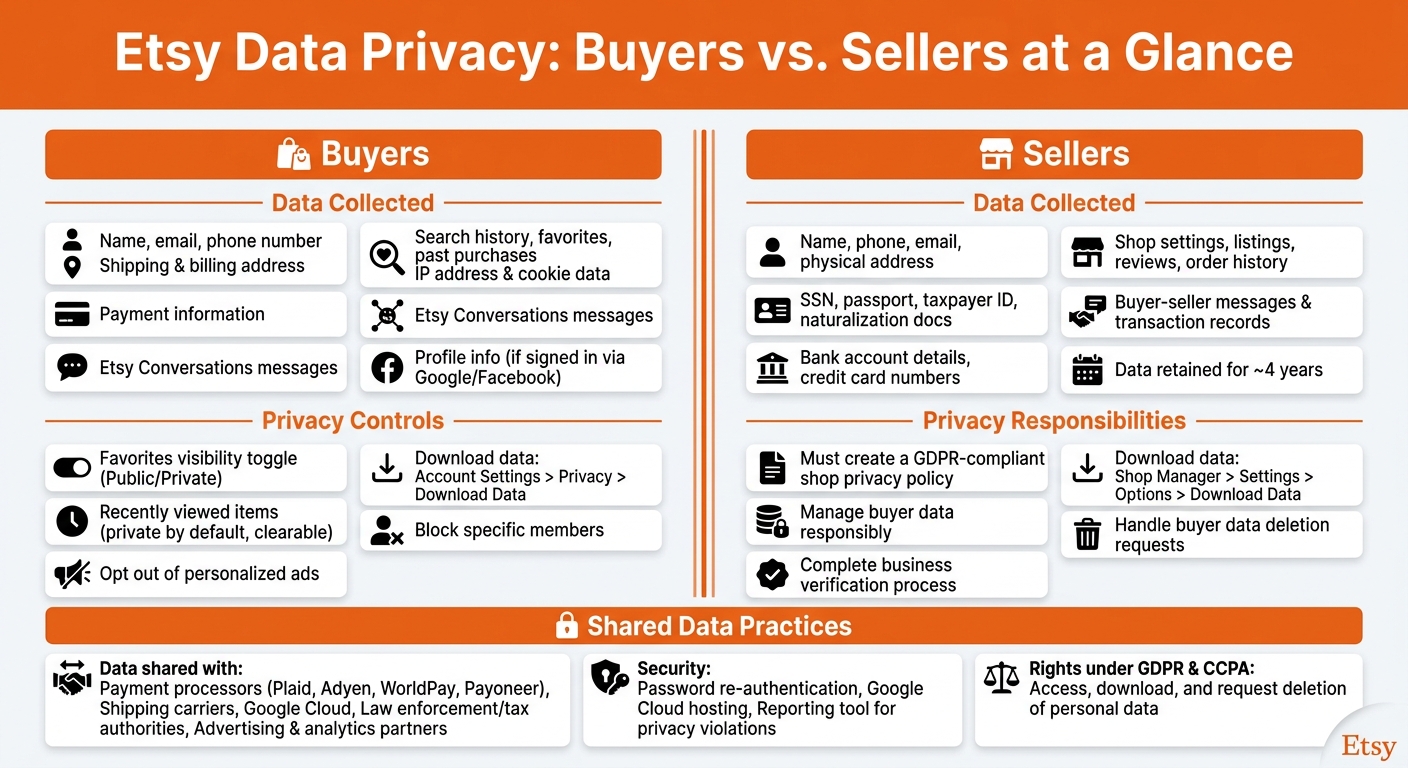
Etsy Data Privacy: Buyers vs. Sellers at a Glance
What Data Does Etsy Collect?
Etsy collects information from everyone who interacts with its platform – whether you’re a buyer, seller, or just a visitor. The specifics of what Etsy gathers depend on how you’re using the site. Here’s a closer look at the data collected from buyers and sellers.
Data Collected from Buyers
If you’re a buyer, Etsy gathers personal details like your name, email, phone number, shipping and billing addresses, and payment information when you sign up or make a purchase. If you register through Google or Facebook, Etsy also receives your profile information from those platforms.
Etsy doesn’t stop there. It tracks your activity on the platform, including your search history, favorite items, past purchases, and browsing behavior. Technical details like your IP address and cookie data are also collected to help with site functionality and advertising. Plus, any messages you send through Etsy Conversations are stored.
"Etsy’s Privacy Policy does not apply to the practices of third parties (including Sellers) who you may choose to share information with when you use the Services." – EHunt
It’s important to note that information shared with individual sellers may not be protected under Etsy’s overall privacy policy. Sellers have their own responsibilities when it comes to handling sensitive data, as outlined below.
Data Collected from Sellers
Sellers provide more detailed information to operate their shops and comply with legal requirements. Here’s what Etsy collects from sellers:
| Category | Data Collected |
|---|---|
| Identity | Name, phone number, email, and physical address |
| Legal/Tax | Social Security number, passport number, taxpayer ID, and naturalization documents |
| Financial | Bank account details, credit card numbers, and financial records |
| Shop Operations | Shop settings, product listings, reviews, and order history |
| Communications | Buyer-seller messages and transaction records |
Etsy holds onto seller data for about 4 years to meet legal and tax requirements. Sellers also have the option to download their complete data records – including orders, reviews, and shop settings – by navigating to Shop Manager > Settings > Options > Download Data.
sbb-itb-5a89343
How Etsy Uses and Shares Your Data
How Etsy Uses Your Data
Etsy collects and uses your data to keep its marketplace running smoothly. This includes connecting buyers with sellers, processing orders, and managing payments. On top of these essentials, your information is also used for personalized product recommendations, targeted ads, and improving the platform’s overall experience.
"Etsy’s Privacy Policy covers… the purpose for which Etsy uses such information (including first and third party advertising purposes), our policies relating to our usage and sharing within Etsy, its affiliates and third party partners." – Etsy
Sellers rely on buyer data to fulfill orders, communicate with customers, and market their products. Meanwhile, Etsy processes data to ensure compliance with regulations like GDPR and CCPA. In addition to these internal uses, Etsy shares data externally when necessary.
When Etsy Shares Your Data with Third Parties
Etsy also shares your data with specific third parties to provide essential services and meet legal requirements. Here’s how your data might be shared:
| Category | Third-Party Entities | Purpose |
|---|---|---|
| Financial Services | Plaid, Adyen, WorldPay (Envoy), Payoneer | Verifying bank accounts, processing payments, and handling deposits |
| Logistics | Postal services, shipping carriers | Delivering orders and providing tracking information |
| Infrastructure | Google Cloud | Storing data and maintaining the platform |
| Legal/Regulatory | Law enforcement, tax authorities | Ensuring legal compliance and resolving disputes |
| Marketing | Advertising and analytics partners | Creating personalized ads and enhancing the platform |
For example, Etsy uses Plaid to confirm US-based sellers’ bank accounts. Plaid is widely used by over 6,000 companies and meets internationally recognized security standards. However, if you’re a US seller using Plaid, it’s best to avoid using a VPN or trying to bypass SMS verification during the process, as it may disrupt the connection.
Etsy may also share data during events like a business sale or merger, but only within legal boundaries. Additionally, if law enforcement or government agencies request data as part of a legal process, Etsy is obligated to comply.
Privacy Controls for Buyers and Sellers
Understanding how privacy controls work on Etsy is important for both buyers and sellers to ensure a secure and transparent experience.
Privacy Settings for Buyers
Etsy provides buyers with straightforward tools to control who can view their activity. One of the most useful features is the Favorites visibility toggle. To make a favorites list private, head to your Favorites page, select a list, click "Edit", and switch the toggle to "Private." When set to private, your favorite items and shops are completely hidden from others.
Your recently viewed items are private by default. If you want to clear this list, go to Account Settings > Privacy > Clear recently viewed listings. Additionally, you can block specific members directly from their profiles if needed.
For those concerned about targeted ads, Etsy allows you to opt out of personalized advertising. Under GDPR and CCPA, you also have the right to access all the data Etsy has collected about you. To do this, navigate to Account Settings > Privacy > Download Data and request your file. Etsy will send a confirmation email before preparing a ZIP file containing your data in CSV and JSON formats. Keep in mind that the download link expires after two weeks, so be sure to retrieve your file promptly.
While buyers have tools to protect their privacy, sellers also have responsibilities to safeguard customer information.
Privacy Responsibilities for Sellers
Sellers on Etsy have a heightened responsibility when it comes to handling privacy. In addition to managing their own account settings, they must carefully handle buyer data such as names, shipping addresses, and other information collected during transactions.
"If you sell to customers in the European Union, you are required by the GDPR to have a privacy policy for your shop." – Alura
Sellers must ensure that buyer data is managed responsibly and must display a privacy policy that complies with GDPR. This can be set up via Shop Manager > Settings > Info & Appearance > Privacy Policy. Etsy provides a template in the Seller Handbook, but sellers need to personalize it to reflect their actual practices. This includes detailing what data is collected, why it’s collected, how it’s shared (e.g., with shipping carriers), and how long it’s retained – typically around four years for tax and legal purposes.
If a buyer requests the deletion of their personal data, which is a right under GDPR, sellers should either handle the request themselves or seek assistance from Etsy Support to ensure compliance.
How Etsy Protects Your Data
Etsy takes your privacy seriously, employing a multi-layered approach to keep your data secure. From platform-level protections to seller-specific safeguards, Etsy ensures both buyers and sellers can trust the system.
Account Security for Buyers and Sellers
Etsy has several measures in place to protect user accounts. One of the simplest yet effective tools is password re-authentication. For example, if you want to download a ZIP file containing your data, you’ll need to re-enter your password. This extra step helps prevent unauthorized access, even if your session has been compromised.
Additionally, Etsy offers a centralized Privacy Settings section in your Account Settings. Here, you can manage data permissions, clear your browsing history, and request a data download. To further secure stored data, Etsy partners with certified third-party hosting providers like Google Cloud.
Seller Verification and Data Security
Sellers on Etsy must complete a business verification process to comply with consumer protection laws. This process involves submitting sensitive documents like passports, Social Security numbers, and financial details, including bank account numbers and taxpayer IDs. These steps ensure that sellers are verified, creating a safer environment for buyers.
Sellers are also expected to outline their own data protection practices in their shop privacy policies. For instance, they should explain how they use encryption to safeguard buyer information during storage and order processing.
To address potential privacy concerns, Etsy provides a reporting tool. This feature allows users to flag shops or listings that may expose personal details, such as email or physical addresses.
"Etsy’s official stance on privacy policies is that they are a legal requirement for sellers who offer goods or services to buyers in the EU." – EHunt
These efforts demonstrate Etsy’s commitment to safeguarding both buyer and seller data.
Practical Tips to Protect Your Privacy on Etsy
While Etsy has strong protections in place, there are additional steps you can take to enhance your privacy.
For buyers, regularly review your Privacy Settings to check what data Etsy holds. If you decide to download your data file, make sure you use a secure, private device. These files contain sensitive information in CSV and JSON formats, and download links expire after two weeks for added security.
For sellers, avoid using your personal phone number for verification. Linking your private number to your business can expose more personal data than necessary. Services like MobileSMS.io allow you to use a disposable SIM-based number for verification, keeping your personal and business information separate. This is especially helpful if you manage multiple shops or want to minimize personal data tied to your account.
If you notice a shop or listing publicly displaying someone’s personal information, use Etsy’s reporting tool immediately. Acting quickly ensures the platform addresses the issue as soon as possible.
Key Takeaways for Etsy Buyers and Sellers
Etsy collects various types of personal information from both buyers and sellers, such as contact details, addresses, financial data, and identity documents. This information is used to facilitate transactions, comply with legal requirements like GDPR and CCPA, and for targeted advertising purposes.
If you ever want to access your personal data, Etsy makes it simple. Buyers and sellers can download a full copy of their data by navigating to Account Settings > Privacy > Download Data. Sellers also have the option to export shop-specific records through Shop Manager > Settings > Options > Download Data.
Etsy provides tools to manage your privacy preferences. You can opt out of targeted ads and adjust data-sharing settings directly from your account settings. Additionally, Etsy’s built-in reporting tool is there to help you stay proactive about your privacy and security.
"On Etsy, we ask that members respect each other’s privacy and personal information." – Etsy Help Center
FAQs
What should I do if I think a seller misused my personal info?
If you think a seller has mishandled your personal information, reach out to Etsy’s support team for help. Take a moment to review their privacy policies to see what steps you can take to report and resolve any concerns. Acting quickly can make it easier to address the situation.
How can I limit Etsy’s tracking without breaking checkout or messages?
To reduce Etsy’s tracking while still allowing checkout and messaging to work smoothly, you can tweak your privacy settings in your account. These settings let you manage data-sharing preferences and opt out of specific tracking activities. Additionally, Etsy requires sellers to outline their data-handling practices. By reviewing and updating these options, you can limit tracking while ensuring key features like transactions and communication remain functional.
What’s the safest way to handle Etsy verification without using my real phone number?
The best approach is to use a real SIM-card-based disposable phone number from a reliable, privacy-focused service. Etsy tends to block VoIP numbers, so this option ensures smooth compatibility.
Here’s how it works: Get a disposable number, use it during Etsy’s verification process, and receive the SMS code instantly. This way, your personal number stays private, safeguarding you from spam or potential data breaches, while still meeting Etsy’s verification rules.