

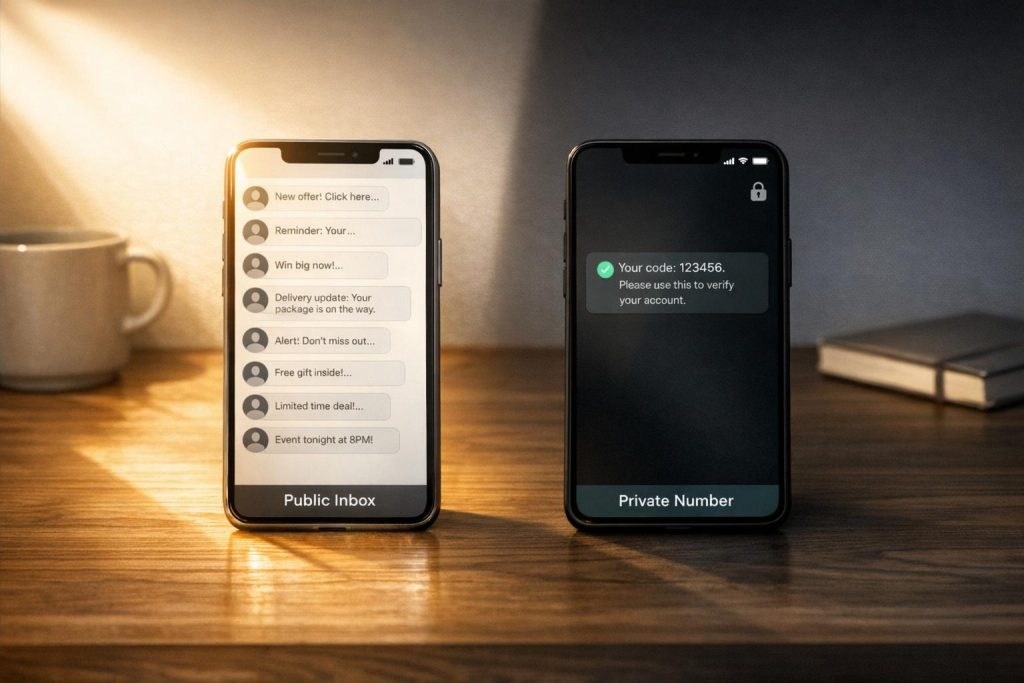
If you’re tired of public SMS inboxes failing to bypass SMS verification, here’s the deal: private temporary phone numbers are a more secure and reliable option. Public inboxes are free but risky – anyone can see your messages, and platforms like WhatsApp and Google often block them. Private numbers, while paid, offer exclusive access and higher success rates, especially for sensitive accounts. Here’s a quick breakdown:
- Public SMS Inboxes: Free, fast, but messages are public, often blocked, and numbers rotate unpredictably.
- Private Numbers: Paid, secure, widely accepted, and tied to you for a set period.
| Feature | Public SMS Inboxes | Private Temporary Numbers |
|---|---|---|
| Cost | Free | Starts at $3.50 per use |
| Message Privacy | Public | Private |
| Platform Success Rate | ~20% | Up to 99.7% |
| Number Type | VoIP (easily blocked) | Real SIM-based (widely accepted) |
For quick, low-risk signups, public inboxes might work. But for important accounts, private numbers are the better choice.
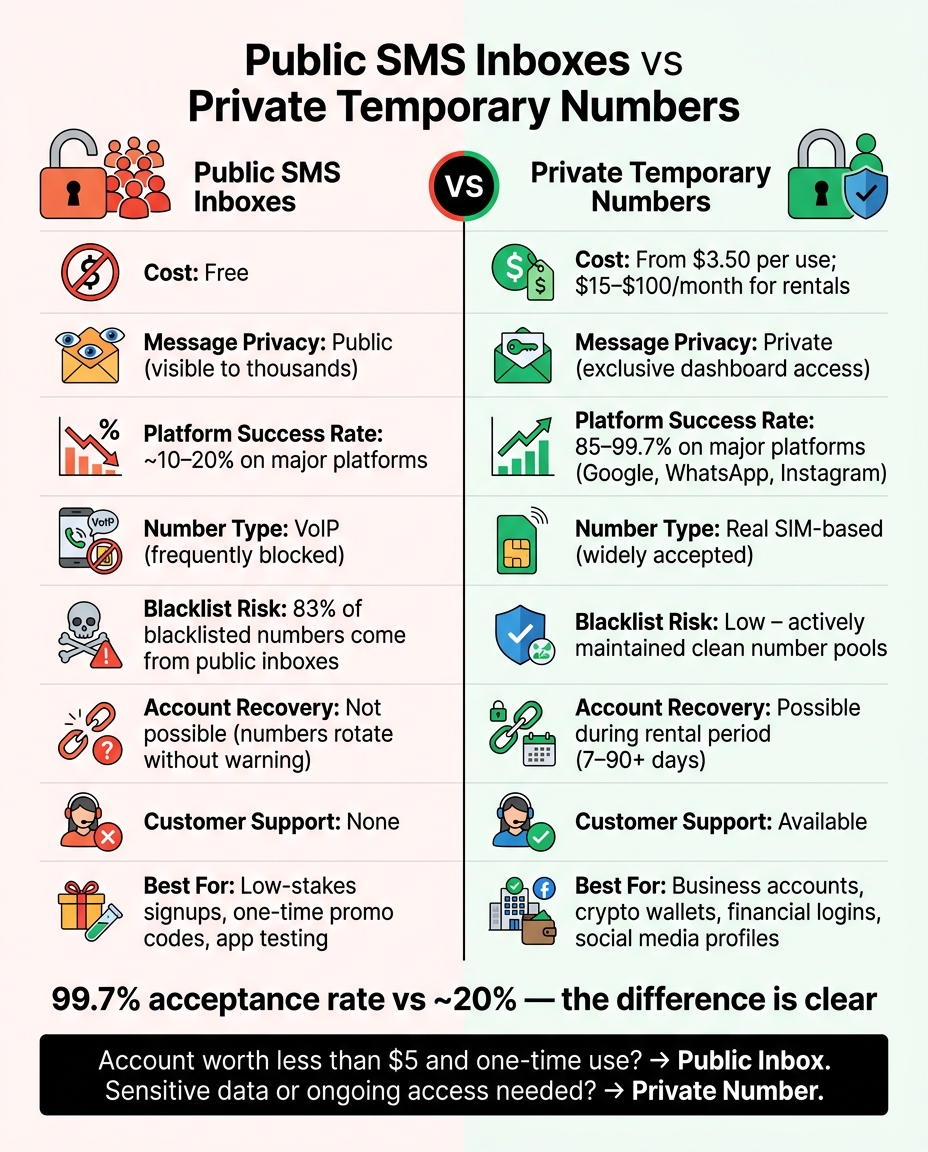
Public SMS Inboxes vs Private Temporary Numbers: Key Differences
Public SMS Inboxes vs Private Temporary Phone Numbers: A Basic Overview
Understanding your options is key to picking the right solution for your SMS verification needs. Let’s break down how each works and what to consider.
What Are Public SMS Inboxes?
Public SMS inboxes are free, shared phone numbers that display incoming messages on a public webpage. No sign-up or account is needed. You simply select a number from a list, wait for your verification code, and retrieve it from a shared dashboard.
These numbers are powered by VoIP (Voice over Internet Protocol) technology, meaning they aren’t connected to a physical mobile carrier. This makes them inexpensive to operate and easy to rotate, which is why they’re offered at no cost. However, major platforms like WhatsApp, Instagram, and Google actively maintain blocklists for these numbers, often rejecting them shortly after they’re made public.
| Received Time | Service | Message Preview |
|---|---|---|
| Jun 3, 2026, 10:15 PM | Bumble | Your Bumble registration code is 480442. |
| Jun 3, 2026, 8:55 PM | 197 771 is your Instagram code. | |
| Jun 3, 2026, 12:44 PM | Signal | SIGNAL code: 857611. Do not share this code. |
The catch? Every message you see here was visible to thousands of others at the same time.
What Are Private Temporary Phone Numbers?
Private temporary phone numbers, on the other hand, offer a more secure and exclusive option. These numbers are assigned solely to you for a set duration – whether for a single verification or a rental period ranging from 7 to 90+ days. Messages are delivered to a private dashboard, ensuring they remain confidential.
The key technical difference lies in the infrastructure. Many private services, like MobileSMS.io, use real SIM-card-based numbers, unlike VoIP. Platforms such as Amazon, Airbnb, and banking apps often use carrier lookup APIs to detect and block VoIP numbers. A real SIM number, however, looks just like a standard mobile line, making it widely accepted across over 1,200 platforms. In comparison, VoIP numbers typically see acceptance rates of only about 40%. This reliability is why users often choose private numbers when dealing with high-stakes accounts or sensitive verifications.
sbb-itb-5a89343
Public SMS Inboxes: Pros and Cons
Advantages of Public SMS Inboxes
Public SMS inboxes are completely free to use – no need for a credit card, subscription, or even an account. This makes them perfect for quick, low-stakes signups. If you’re signing up for a newsletter or testing a registration process, they can be quite handy.
Another perk? They’re incredibly fast. The whole process takes under a minute: pick a country, enter the number into the service, and refresh the page to grab your code. For one-time signups where you don’t plan on returning, these inboxes get the job done quickly and efficiently.
Drawbacks of Public SMS Inboxes
That said, the convenience of public SMS inboxes comes with some serious downsides.
One of the biggest concerns is privacy – or the lack of it. Messages sent to a public inbox are visible to anyone who visits that page, potentially thousands of people at once. Your verification code? It’s not just yours. This is a fundamental flaw in how SMS verification works for public services. As one editorial team bluntly put it:
"A complete stranger can refresh the same page, read your code, and take over your account before you even have a chance to use it." – Text Verification Editorial Team
Then there’s the issue of reliability. Public SMS numbers are typically VoIP-based, and platforms like Google, WhatsApp, and Instagram actively block them. New numbers often get flagged within hours, leading to a success rate of only about 20% on popular platforms. This unpredictability can be frustrating if you’re relying on the service to work.
Another problem often overlooked is the temporary nature of public numbers. These numbers rotate or disappear without any warning. If you’ve tied an account to one and need to recover a password or re-verify your login, you’re out of luck. There’s no way to regain access, no support team to help, and no backup plan.
Here’s a quick breakdown of these drawbacks and their real-world consequences:
| Issue | Real-World Impact |
|---|---|
| Public message visibility | Anyone can intercept your verification code instantly |
| VoIP detection | Only ~20% success rate on major platforms like Google or WhatsApp |
| Number rotation | No way to recover accounts or re-verify once the number is gone |
| No customer support | No help available if the number fails or disappears |
While public SMS inboxes shine in terms of speed and ease for short-term use, they’re not a good choice for anything involving sensitive information or ongoing access. Up next, we’ll dive into how private temporary phone numbers stack up.
Private Temporary Phone Numbers: Pros and Considerations
Key Advantages of Private Temporary Numbers
Private temporary numbers give you exclusive control – only you can access the messages sent to your number. This eliminates the risk of someone else intercepting your verification codes by simply refreshing a public inbox.
This exclusivity becomes especially important when platforms screen for shared or disposable numbers. Services like MobileSMS.io use real SIM-based numbers, which function just like traditional mobile numbers on carrier networks. This approach significantly boosts reliability. In fact, MobileSMS.io reports a 99.7% platform acceptance rate for their numbers on platforms like Google, WhatsApp, Instagram, and Tinder. Compare that to the roughly 40% acceptance rate for most VoIP services, and the difference is clear.
Another advantage is consistency. If you’re managing accounts that require periodic re-verification – like marketplace seller profiles, social media accounts, or fintech apps – a long-term rental ensures the same number stays tied to your account for the entire rental period. Whether you choose 7, 30, or 90 days, this continuity is critical for maintaining uninterrupted access. Public inboxes simply can’t match this level of reliability.
Limitations of Private Temporary Numbers
Despite their benefits, private numbers come with some challenges, particularly around cost and upkeep. Pricing is a key consideration. For example, a one-time private number from MobileSMS.io starts at $3.50 per verification. Long-term rentals range from $15 for a 7-day single-service number to $100 per month for a premium plan that includes automatic SMS forwarding. Compared to free public options, this represents a tradeoff between added security and affordability. Understanding the risks of free temporary phone numbers is essential before choosing a public inbox.
Another challenge is active management. Long-term rentals require renewal, and if you forget to renew, the number may be reclaimed. This can make it nearly impossible to recover accounts tied to that number. It’s a good idea to set reminders for renewal deadlines and keep a clear record of which number is linked to each service to avoid any headaches.
"Credits are typically only deducted if an SMS is successfully received, providing a safeguard against non-functional numbers." – MobileSMS.io
This pay-per-success model helps ease the cost concern, ensuring you only pay when the service works as intended. For those relying on the service, that guarantee can make all the difference.
Public SMS Inboxes vs Private Temporary Numbers: Direct Comparison
Privacy and Security Comparison
The main distinction lies in who can view your messages. With public SMS inboxes, your verification codes are openly accessible to anyone visiting the site. On popular free platforms, a single OTP (one-time password) might be visible to hundreds of users at the same time. This creates a significant risk of someone intercepting and using your code before you can.
Private temporary numbers, on the other hand, keep your messages secure in a personalized dashboard that only you can access. This is especially important in scenarios where someone could use your code to hijack an account mid-registration or during a password reset.
| Feature | Public SMS Inboxes | Private Temporary Numbers |
|---|---|---|
| Message Visibility | Public; anyone can read them | Private; only accessible to you |
| Account Ownership Risk | High; codes can be exploited by others | Low; exclusive to your session |
| Interception Risk | Extremely high | Low (messages are encrypted) |
| Data Control | None; messages are often stored publicly | High; messages are usually discarded after delivery |
"Anyone viewing that website can see your verification code. This means someone else could potentially hijack your account before you finish the sign-up process." – VerifySMS
Next, let’s look at how these privacy differences translate into SMS delivery reliability.
Reliability and Platform Acceptance
While privacy is vital, the reliability of SMS delivery is equally crucial. Public inboxes often fail to deliver on major platforms. In fact, free public numbers are rejected in over 90% of verification attempts on platforms like Google, WhatsApp, and Meta. Many of these platforms actively block public number pools at the prefix level, preventing SMS delivery before it even begins. Additionally, more than 70% of major platforms now perform carrier-type checks, instantly rejecting VoIP numbers (which dominate free services).
Private temporary numbers, particularly those backed by real SIM cards like those from MobileSMS.io, operate in a completely different league. They boast an 85–95% success rate on major platforms, with MobileSMS.io reporting a 99.7% acceptance rate for services like Google, WhatsApp, and Instagram. This isn’t just a small improvement – it’s the difference between a functional tool and one that fails when you need it most, as seen in our Textverified vs MobileSMS.io comparison.
| Metric | Public SMS Inboxes | Private Temporary Numbers |
|---|---|---|
| Delivery Success Rate | Less than 10% on major platforms | 85–95%+ on most platforms |
| Carrier Type | Primarily VoIP (frequently blocked) | SIM-backed / Non-VoIP (widely accepted) |
| Blacklist Status | Heavily blacklisted at prefix level | Actively maintained, clean number pools |
| Platform Compatibility | Fails on apps like WhatsApp, Binance, and banking platforms | Works seamlessly with Google, WhatsApp, Meta, and more |
| Refund on failed delivery | Not applicable (free service) | Automatic refunds for failed deliveries |
83% of blacklisted phone numbers on major platforms come from public shared-number sites. If a platform enforces even basic security measures, public inbox numbers are almost guaranteed to fail.
How to Choose the Right Option for Your Situation
When deciding on a verification method, think about the potential losses from a compromised account rather than just focusing on cost. Here’s a quick guide to help you align the method with your account’s risk level.
When to Use Public SMS Inboxes
Public inboxes work well for low-stakes situations – like grabbing a one-time promo code, downloading free resources, or testing an app’s signup process. These scenarios typically don’t involve payment details, personal identity, or any major consequences if the account gets lost.
A simple rule: if the account is worth less than $5 in time or money, and you won’t need to log in again, a public inbox should suffice. Just remember, verification codes are public, and the number might get blocked quickly.
When to Use Private Temporary Numbers
For accounts tied to sensitive or valuable information, private temporary numbers are the better choice. Think about business social media profiles, crypto wallets, or financial logins. Public inboxes are risky here – not only are they less secure, but many platforms reject them outright.
MobileSMS.io is a solid option in these cases. It offers real SIM-card numbers from over 100 countries, accepted on more than 1,200 platforms. Plus, their pay-per-success pricing ensures you’re only charged when the verification code is delivered. For managing multiple accounts, their flexible rental plans keep numbers secure and separate.
"Public numbers are best for quick tests, low-risk sign-ups, and trying new apps. Because the inboxes are public, they may be filtered by popular platforms and aren’t suitable for long-term logins or 2FA." – MobileSMS.io
If you’re handling accounts that affect your income or involve sensitive data, setting aside $10–$50/month for private numbers is a practical way to avoid the headaches of verification failures or account losses caused by public inboxes.
Conclusion: Key Takeaways
Deciding between public inboxes and private temporary numbers boils down to how much risk you’re willing to take with your account. Public inboxes might be fast and free, but private temporary numbers offer secure and exclusive access to your verification codes.
The trade-off is straightforward: public inboxes come with exposure risks and potential rejection, while private numbers provide consistent reliability across platforms. A shared number handling hundreds of messages daily increases the likelihood of blacklisting, making public inboxes less dependable as platforms enhance fraud detection measures. It’s all about weighing short-term convenience against long-term account security.
For disposable accounts, quick tests, or non-critical tasks, public inboxes might suffice. But for anything involving sensitive data or critical accounts, a private number is a smart choice. Providers like MobileSMS.io stand out by offering real SIM-card numbers (not VoIP), compatibility with over 1,200 platforms, and a pay-per-success model – charging only when a code is successfully delivered. Plus, using a private number keeps your personal U.S. phone number off marketing lists, out of data breaches, and away from untrusted platforms. That separation is exactly what makes private numbers so valuable.
Ultimately, your decision should match the importance and sensitivity of your account.
FAQs
Will a public SMS inbox work for Google or WhatsApp verification?
Public SMS inboxes are not a dependable choice for verifying accounts on platforms like Google or WhatsApp. Here’s why:
- Detection and Blocking: These platforms have sophisticated systems designed to identify and block virtual or VoIP numbers, which are commonly used by public SMS services. This often results in verification attempts being rejected.
- Security Risks: Public inboxes are accessible to anyone, meaning your verification codes are exposed. This creates a significant risk of someone hijacking your account.
- Blacklisted Numbers: Many major platforms maintain blacklists of public and virtual numbers. Using these can lead to verification failures or, worse, account suspensions.
For secure and successful verification, it’s best to stick with private, trusted phone numbers.
How long should I rent a private temporary number for 2FA?
When setting up two-factor authentication (2FA), it’s wise to rent a number for a duration that matches your account usage needs. Short-term rentals lasting only 10–20 minutes aren’t suitable for future verification or recovery purposes. Instead, consider renting a number for a period between 7 days and 12 months. This ensures stable access and reduces the risk of being locked out of your account while maintaining consistent security for ongoing verifications.
What should I do if my verification code never arrives?
If your verification code isn’t showing up, double-check that the phone number you provided is accurate and includes the correct country code (like +1 for the U.S.). Also, make sure your IP address matches the country of the phone number.
You can try clearing your browser’s cache and cookies or switching to incognito mode. If that doesn’t work, wait 5–10 minutes before requesting a new code to avoid hitting rate limits. Alternatively, you might want to use a different phone number, device, network, or even try a number from another country to get around potential blocks.