

Using cheap SMS verification numbers can save money but often leads to account bans. The key is finding numbers that platforms trust. Here’s a quick breakdown of options:
- India: Extremely low-cost ($0.0023–$3.50), fast delivery (5–10 seconds), but Non-VoIP numbers are preferred as VoIP numbers often face bans. Best for bulk testing or regional apps.
- United States: Reliable ($0.005–$0.26), high acceptance rates (80–95%), and low ban risk with proper registration. Ideal for global platforms like WhatsApp, Google, and PayPal.
- United Kingdom: Affordable ($0.05–$1.39), quick delivery (1–5 seconds), and high reliability. Great for European platforms and fintech services.
- China: Very cheap ($0.075–$0.08) but disposable numbers expire quickly and are best for one-time verifications on local apps like WeChat.
Quick Comparison
| Country | Price (Per SMS) | Delivery Speed | Acceptance Rate | Ban Risk | Best Use Case |
|---|---|---|---|---|---|
| United States | $0.005–$0.26 | 5–10 seconds | High | Low | Global platforms (Google, PayPal, etc.) |
| India | $0.0023–$3.50 | 5–10 seconds | Moderate | High | Bulk testing, regional apps |
| United Kingdom | $0.05–$1.39 | 1–5 seconds | High | Low | European platforms, fintech services |
| China | $0.075–$0.08 | 5–20 seconds | Moderate | High | Local apps (WeChat, Douyin) |
For long-term use, U.S. and U.K. numbers are dependable. Indian and Chinese numbers are better suited for temporary or bulk needs. Choose based on your platform and security requirements.
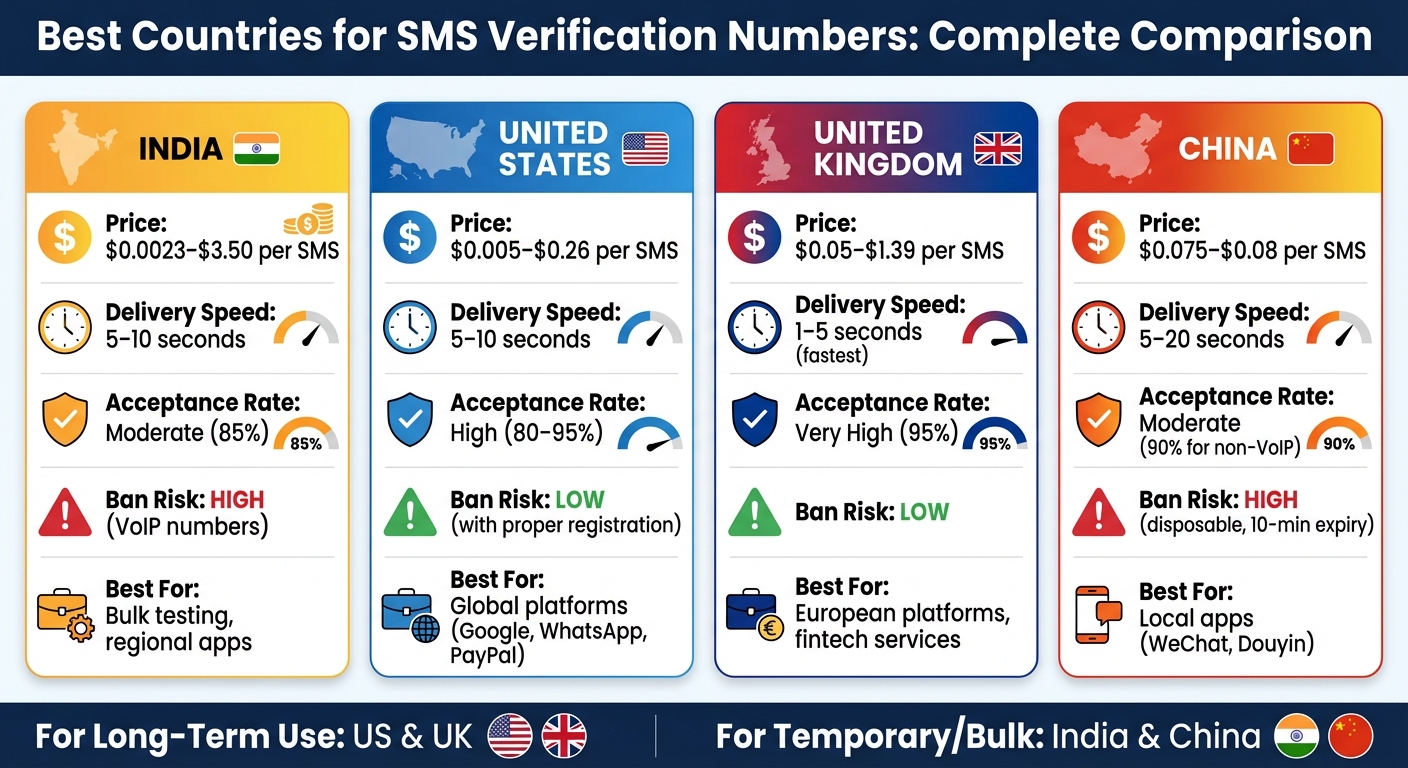
SMS Verification Numbers by Country: Price, Speed, and Ban Risk Comparison
1. India
India is known for offering some of the lowest SMS verification prices globally. However, low cost alone doesn’t guarantee reliability or acceptance across platforms.
Here’s a breakdown of India’s performance based on pricing, speed, acceptance rates, and ban risk.
Price (US$)
Indian numbers are incredibly affordable, starting at just $0.0023 per message for bulk API verifications. Firebase Authentication, for instance, charges $0.01 per verification. On the premium side, real SIM-based numbers from providers like MobileSMS.io cost around $3.50+. These higher prices reflect the added reliability of genuine carrier connectivity. India’s vast telecom infrastructure is the main driver behind such low pricing.
Delivery Speed
When it comes to speed, Indian providers excel. Most OTP codes are delivered in 5–10 seconds through direct operator connections. According to Message Central, 99% of OTP messages arrive within that timeframe when using these connections. However, delivery might slow during rural congestion or high-traffic events. Additionally, the Distributed Ledger Technology (DLT) framework, enforced by the Telecom Regulatory Authority of India (TRAI), can sometimes delay messages for unregistered entities or virtual number services.
Acceptance Rate
Acceptance rates for Indian numbers vary depending on whether they are SIM-based or VoIP. Genuine SIM-based numbers are widely accepted by over 500 apps, including banking, UPI, and government portals. On the other hand, VoIP numbers, which cost between $0.20–$0.50, are frequently blocked by banks and major social media platforms. Overall, standard SMS delivery rates in India are around 85%, meaning about 15% of messages may fail at scale.
Ban Risk
The risk of bans depends heavily on the type of number used. Cheap VoIP-based numbers are risky for sensitive accounts, such as banking (e.g., SBI, HDFC, ICICI) or government services like Aadhaar, as these platforms actively block virtual numbers. Real SIM numbers, like those offered by MobileSMS.io, have a much lower ban risk, though they come at a higher cost. While budget options may seem appealing, they can lead to account bans when used for critical applications, highlighting the risks of sharing your real phone number or using unreliable virtual alternatives.
"India’s telecom market is among the largest and fastest growing in the world, fueled by widespread smartphone adoption, low-cost data, and rapid 5G rollout." – Corbado
For testing purposes, Firebase offers 10 free SMS verifications daily. If you’re interested in more platform-specific guidance, check out our Receive SMS Online India guide.
Up next, we’ll see how these metrics compare to U.S. numbers.
sbb-itb-5a89343
2. United States
When compared to India’s lower-cost but riskier options, U.S. numbers strike a balance with higher platform acceptance rates and reduced ban risks when you bypass SMS verification. Here’s a closer look at their performance across key metrics.
Price (US$)
U.S. numbers offer competitive pricing for SMS verification. The cost per message typically ranges from $0.005 to $0.016, with providers like Twilio charging around $0.0083 per SMS. Monthly leasing is affordable, with 10-digit long codes (10DLC) priced at $1.15/month and toll-free numbers at $2.15/month. However, major carriers like AT&T, T-Mobile, and Verizon add pass-through fees of $0.0025 to $0.005 per SMS on top of the base rates. This pricing structure ensures a solid mix of affordability and reliability, making U.S. numbers a reasonable choice.
Delivery Speed
Major carriers such as Verizon, AT&T, and T-Mobile provide instant code delivery with an 80% acceptance rate. That said, proper A2P 10DLC or Toll-Free registration is essential to avoid carrier blocks. VoIP alternatives, on the other hand, face challenges with only a 30% success rate and are more susceptible to delays or outright blocking.
Acceptance Rate
U.S. numbers using SIM cards from major carriers achieve an 80% acceptance rate on platforms like Google, WhatsApp, and Telegram. This is significantly higher than the 30% acceptance rate seen with VoIP numbers. Despite increasing security concerns, non-VoIP U.S. numbers remain a reliable option for routine account verifications, directly influencing their reduced ban risks.
Ban Risk
SIM-based U.S. numbers are recognized as legitimate by most platforms, which helps lower the risk of bans. However, SMS OTPs still experience a 20% failure rate, often due to network congestion or carrier spam filters. For accounts requiring high security, U.S. numbers alone shouldn’t be relied upon for authentication.
"Do not use SMS as a second factor for authentication. SMS messages are not encrypted. A threat actor with access to a telecommunication provider’s network who intercepts these messages can read them." – CISA
Up next, we’ll explore how UK numbers stack up against these metrics.
3. United Kingdom
UK numbers offer a balance of affordability and reliable performance. They provide a solid alternative to U.S. options, combining cost efficiency with dependable service.
Price (US$)
Disposable UK verification numbers are budget-friendly, starting at just $0.05. For specific platforms, costs vary – around $0.29 for Amazon and up to $1.39 for Telegram. Monthly rentals are also reasonably priced, typically ranging from $0.99 to $1.15, which is lower compared to pricier regions like Italy or Australia. With monthly rentals, inbound SMS is usually free, though some enterprise providers charge a small fee of about $0.0075 per message.
Delivery Speed
Top UK providers rely on Tier 1 network connections to ensure OTP codes are delivered quickly – usually within 1 to 5 seconds. These direct routes bypass delays caused by international "grey routes." Premium UK SMS gateways boast an annual uptime of 99.95%, with enterprise-grade routes achieving 99.7% delivery success rates. On the other hand, free public UK numbers can experience delays ranging from 2 to 180 seconds, and users might need to refresh manually to access the codes.
Acceptance Rate
UK mobile numbers, often starting with the 07xx prefix, are highly effective for SMS verification. Landline and toll-free numbers, however, face stricter limitations. Physical SIM cards from trusted providers like Giffgaff or 1pMobile are considered the best choice for avoiding bans, especially for sensitive platforms like banking apps. Virtual numbers from specialized APIs can achieve about 95% success rates globally, but low-cost, reused numbers are more prone to bans due to previous activity.
Ban Risk
Using numbers from physical SIM cards can help them appear indistinguishable from regular mobile handsets, making them less likely to be flagged by strict platform filters. Meanwhile, shared "free" UK numbers, which can receive over 10,000 SMS daily, are at a higher risk of being blacklisted. For accounts that require regular re-verification, like PayPal or banking platforms, dedicated or private numbers are a safer choice to reduce the chance of account suspension.
4. China
When it comes to Asia, Chinese numbers stand out for their extremely low costs, though they come with limitations in terms of usability over time.
Chinese numbers rank among the most affordable globally for SMS verification, with prices starting at just $0.075 to $0.08 per message. These rates are far below those in the U.S. ($0.26) and premium markets like Japan ($4.93) or Australia ($3.24). This affordability is made possible by China’s massive telecom infrastructure, which includes 1.8 billion active SIM cards for a population of 1.4 billion, ensuring a steady supply of numbers.
Price (US$)
At about eight cents per message, Chinese numbers are a fraction of the cost of U.S. options. However, this low price is usually tied to temporary phone numbers with very short lifespans. For recurring needs like two-factor authentication or re-verification, Chinese numbers are typically unavailable for long-term rental. This is in contrast to countries like the U.S. or U.K., where monthly plans are common. While affordable, these numbers are best suited for one-time verifications.
Delivery Speed
Premium SMS gateways in China ensure delivery times of under 20 seconds, with direct routes through major providers like China Mobile, China Unicom, and China Telecom delivering codes in just 5 to 10 seconds. Enterprise gateways also maintain a 99.7% platform availability under service agreements. However, delivery can occasionally be delayed by strict local filtering rules or carrier-specific word restrictions, which may block certain messages. The method of delivery also plays a role in the acceptance rate, as explained below.
Acceptance Rate
Numbers from major Chinese carriers, using physical SIM cards, achieve over 90% success rates on platforms with strict verification protocols. In contrast, virtual numbers often fail, with success rates dropping to just 21% for services like Facebook. For apps specific to China – such as WeChat, Baidu, or the Chinese version of TikTok – non-VoIP numbers are a must, as virtual numbers are often rejected outright by these platforms.
Ban Risk
The biggest drawback of Chinese numbers is their temporary nature. Disposable numbers expire after just 10 minutes, meaning they cannot handle re-verification or secondary security checks. If a platform requests additional verification later, you risk losing access to the account. Because of this, Chinese numbers are best used exclusively for initial sign-ups, where no future recovery is anticipated. For accounts requiring ongoing verification, the short lifespan of these numbers makes them less reliable, despite their low cost. This trade-off between affordability and dependability is a recurring theme with disposable options.
Pros and Cons
Here’s a quick comparison of SMS verification metrics across different countries, summarizing key details to help you decide:
| Country | Price (Per SMS) | Delivery Speed | Acceptance Rate | Ban Risk | Best Use Case |
|---|---|---|---|---|---|
| United States | $0.007–$0.26 | Around 5–10 seconds | Very High | Low (requires 10DLC/Toll-Free registration) | Global platforms like Google, WhatsApp, PayPal, and finance apps |
| India | $0.068–$0.093 | Around 10–20 seconds | High (DLT-compliant) | High (strict regulatory requirements) | Regional OTPs and South Asian-focused platforms |
| United Kingdom | $0.046–$0.071 | Around 5–15 seconds | Very High | Low | Fintech services, European platforms, and dating apps (e.g., Tinder) |
| China | $0.046–$0.08 | Around 5–20 seconds | Moderate | High | One-time verifications for local apps like WeChat and Douyin |
This table highlights the balance between affordability and reliability. For long-term use, US and UK numbers are ideal, while Indian and Chinese numbers are better suited for bulk testing or temporary accounts. Choose based on your specific SMS verification needs.
Conclusion
Choose your SMS verification country based on your specific needs and goals.
- India: Perfect for bulk testing and temporary accounts, with costs around $0.07 per SMS. It’s a budget-friendly option for handling high volumes.
- United States: Ideal for primary accounts on global platforms like Google, WhatsApp, and PayPal, costing about $0.01 per SMS. Adhering to regulations like 10DLC and toll-free standards minimizes the risk of bans for legitimate users.
- United Kingdom: Best suited for e-commerce and European-facing platforms, priced at roughly $0.04 per SMS. Fast delivery builds trust on marketplaces like Amazon and eBay.
- China: Essential for region-specific apps like WeChat, Douyin, and Baidu. Local numbers (+86) ensure compatibility, with competitive rates making them a smart choice for local platform verifications.
Each option aligns with different use cases, so weigh your priorities to make the right choice.
FAQs
SIM-based or VoIP numbers – which gets banned less?
SIM-based numbers tend to face fewer bans compared to VoIP numbers. This is because they are linked to actual cellular networks, which makes them more dependable and broadly accepted for SMS verification purposes. On the other hand, VoIP numbers operate through the internet, making them more susceptible to being flagged or rejected due to concerns about fraud or restrictions on certain platforms. If avoiding bans is a priority, SIM-based numbers are the better option.
When do I need A2P 10DLC or Toll-Free registration in the U.S.?
In the U.S., businesses sending high-volume SMS campaigns – like marketing promotions, customer updates, or transactional alerts – must register for either A2P 10DLC or Toll-Free numbers. This registration aligns with carrier regulations and helps ensure your messages are delivered successfully.
By registering, you reduce the risk of message filtering or outright bans, keeping your campaigns compliant and maintaining trust with carriers.
Are disposable numbers safe if I need account recovery later?
Disposable numbers can be a useful tool for account recovery, but only if handled carefully. Many platforms view these numbers with suspicion, often associating them with fraudulent activity. This can lead to bans or restrictions on your account.
For important accounts, it’s better to rely on trusted providers that offer real SIM-card numbers. To ensure you don’t lose access, consider pairing disposable numbers with other recovery methods, like email or authenticator apps, for added security.